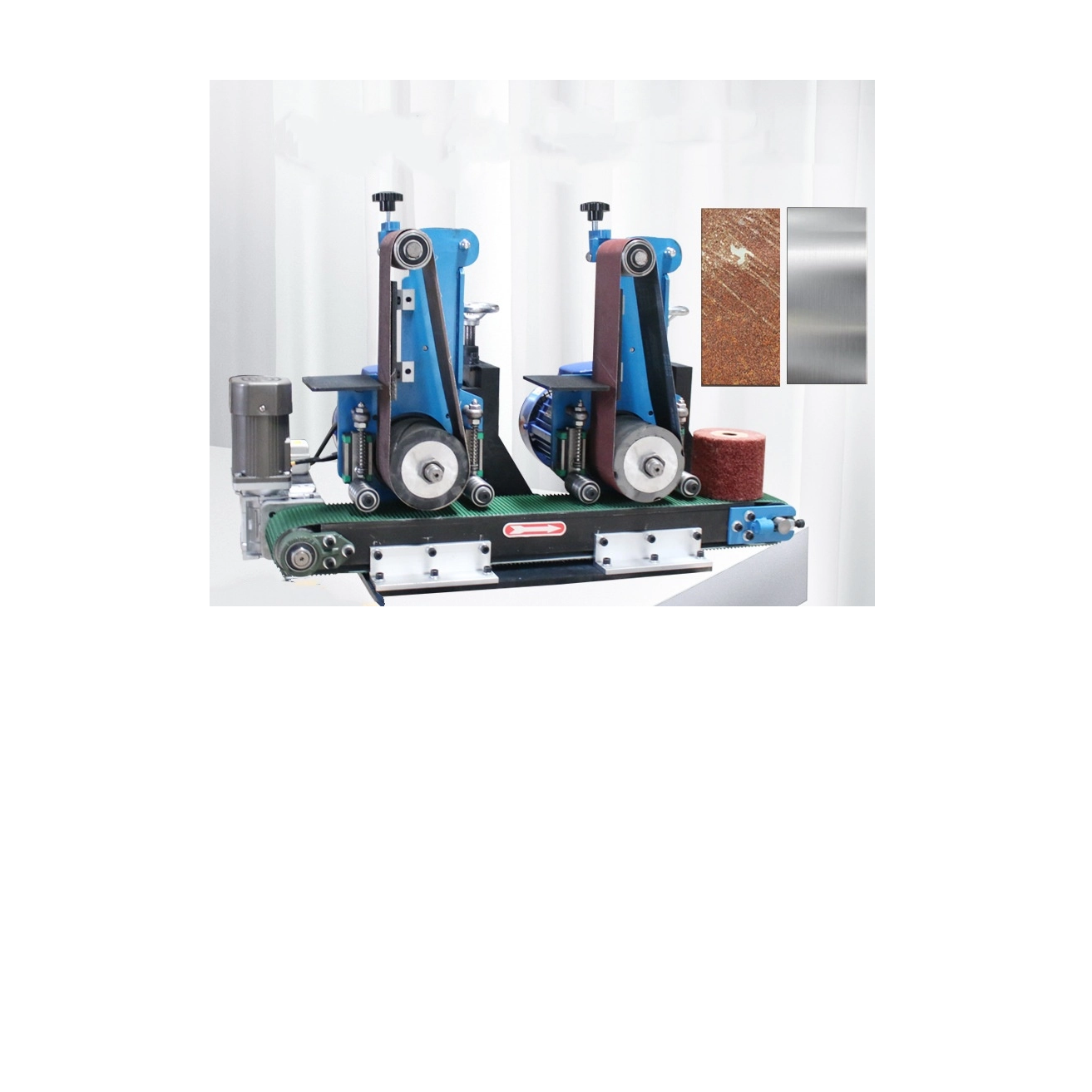
Transitioning from manual surface finishing to automated systems is an essential step. It helps scale modern production effectively. Manual processes often fall short when you need strict tolerance compliance. Manufacturers must adapt to control unit economics and maintain competitive margins. Automation replaces variable hand-polishing processes.
The core mechanics of surface conditioning remain stable across decades. However, modern manufacturing environments require highly specific equipment configurations. Sectors like additive manufacturing, EV component production, and medical implants demand extreme precision. They push boundaries far beyond traditional deburring. You need targeted machinery for these tasks.
This guide moves past basic definitions to explore practical implementation strategies. We will show engineering and procurement teams how to evaluate and shortlist equipment. You will learn how to align a mass finishing machine directly to your industry-specific production realities. Empirical testing and smart evaluation ensure long-term success.
Key Takeaways
Application Specificity: High-tolerance industries (medical, aerospace) rely on mass finishing not just for aesthetics, but for critical fatigue resistance and friction reduction.
Equipment Mapping: Choosing between vibratory, centrifugal, or tub systems depends entirely on part geometry, fragility, and required cycle times rather than baseline capital cost.
Implementation Realities: Operational budgets are heavily influenced by overlooked factors like wastewater management (effluent), acoustic isolation, and media consumption rates.
Evaluation Protocol: The most reliable procurement path requires pre-purchase sample processing to validate media selection and cycle times against actual production parts.
The Business Case: Why Manufacturers are Upgrading Surface Finishing
Modern production facilities face immense pressure to optimize workflows. Legacy finishing methods cannot sustain high-volume demands. Facilities must upgrade to remain competitive and profitable.
Labor and Scrap Reduction
Transitioning from manual deburring to an automated system eliminates human error. Manual stations rely heavily on human operators. Operators naturally fatigue over long shifts. This fatigue creates uneven surface finishes across batches. Uneven finishes lead to higher scrap rates. Scrapping high-value parts damages overall profitability.
You can stabilize labor costs by automating this critical step. Consistent machines replace variable human effort. A mass finishing process guarantees uniform results on every cycle. Your team can then redeploy skilled labor to higher-value tasks.
Compliance and Repeatability
Meeting stringent ISO and ASTM surface roughness standards is difficult manually. Automated systems provide highly predictable outcomes. They deliver the exact repeatable Ra (roughness average) values required by modern engineering. Aerospace and medical sectors demand strict consistency. You cannot guess compliance. You must guarantee it.
Precision automation ensures every batch meets specific regulatory criteria. Documented repeatability satisfies audit requirements easily. Consistent Ra values prevent catastrophic part failures in the field.
Throughput Bottlenecks
Legacy finishing processes often create severe production bottlenecks. Production lines scale up quickly. Hand-polishing simply cannot keep pace. Parts pile up waiting for final treatment. A continuous-feed automated system resolves this frustrating issue entirely.
It moves components smoothly through the finishing line. Throughput increases dramatically. You reduce work-in-progress inventory holding times. The entire facility operates much more efficiently.
Best Practice: Always audit your current manual scrap rates before purchasing equipment. Use this data to calculate your exact return on investment.
Common Mistake: Treating surface finishing as an afterthought causes massive assembly delays downstream.
High-Stakes Applications by Industry and Component
Different industries require unique surface treatments. Standard deburring is rarely enough for high-tech applications. Specialized components demand specialized processing.
Aerospace & Defense
Aerospace components face extreme operational stresses. Isotropic superfinishing treats turbine blades and structural fasteners. This specialized application removes dangerous micro-defects from metal surfaces.
The outcome drastically improves component fatigue life. It also reduces friction across moving parts inside jet engines. Friction reduction translates directly to better fuel efficiency. Superfinished blades resist catastrophic stress fractures better than standard parts.
Medical Device Manufacturing
The medical industry demands absolute sterility and precision. Facilities use automated systems to polish titanium orthopedic implants. They also finish delicate surgical instruments.
The ultimate outcome achieves sterile, bio-compatible surface finishes. Crucially, the process does not alter critical micro-geometries. A hip implant must maintain its exact dimensional tolerances to function. Smooth surfaces prevent harmful bacterial adhesion inside the human body.
Automotive & EV Production
Electric vehicles operate much more quietly than combustion engines. This highlights unwanted mechanical noises. Manufacturers use finishing systems for deflashing and smoothing transmission gears. They also treat bearings and die-cast aluminum housings.
The outcome significantly reduces operational noise, vibration, and harshness (NVH). Smooth gears run silently. Automated smoothing also extends the lifespan of high-stress moving parts. EV drivetrains demand this specialized friction reduction to maximize battery range.
Additive Manufacturing (3D Printing)
3D printing creates highly complex geometries. However, printed parts often suffer from rough external textures. Facilities apply surface smoothing and support-mark removal techniques. They use them for complex DMLS (Direct Metal Laser Sintering) parts.
The outcome successfully bridges the gap between raw printed textures and end-use functional requirements. Raw printed parts are rarely ready for direct mechanical assembly. Surface conditioning makes them structurally viable.
Industry Application Summary Chart
Industry
Typical Components
Primary Finishing Goal
Aerospace
Turbine blades, fasteners
Fatigue life extension, friction reduction
Medical
Titanium joints, scalpels
Bio-compatibility, strict dimensional hold
EV Automotive
Gears, aluminum housings
NVH reduction, edge radiusing
Additive Mfg
DMLS printed parts
Texture smoothing, support removal
Aligning Machine Categories with Production Outcomes
Choosing the correct equipment category is crucial. You must match machine capabilities to your exact part geometries. Selecting the wrong category damages fragile parts or slows production.
Vibratory Finishing Bowls & Tubs
These systems represent the industry standard. They utilize a spinning internal motor to generate aggressive vibrations. The vibration rolls media and parts together in a fluid motion.
They are best for general-purpose deburring and burnishing. They excel at large-batch processing of highly robust parts. A mass finishing machine using a vibratory bowl handles heavy castings effortlessly.
However, they have distinct limitations. You will experience much slower cycle times compared to other methods. They are not ideal for extremely fragile parts. They also struggle when handling flat parts prone to nesting together.
Centrifugal Barrel & Disc Machines
Centrifugal systems generate massive internal G-forces. They spin barrels or discs at incredibly high speeds. This creates a high-energy environment inside the processing chamber.
They are best for high-energy surface conditioning. Use them for small, delicate, or highly complex geometries. They deliver rapid cycle times. Centrifugal machines process parts up to ten times faster than vibratory bowls.
They also have limitations to consider. They require a much higher initial capital expenditure. Furthermore, they typically offer smaller batch capacities per cycle. You must balance speed against volume requirements.
Drag Finishing Systems
Drag systems utilize a carousel mechanism. Operators mount individual parts onto specialized fixtures. The machine drags these fixtures through a stationary bed of abrasive media.
They are best for high-value, complex components. Cutting tools and medical knee joints require this method. These parts simply cannot tolerate part-on-part contact during the cycle. Drag finishing guarantees zero impingement damage. Every single part receives identical exposure to the media.
Assess part fragility first.
Determine your required cycle time.
Calculate necessary batch volumes.
Select the machine category matching these three variables.
Evaluation Framework: Shortlisting the Right Mass Finishing Machine
Procurement teams need a structured evaluation framework. Do not buy equipment based solely on brochure specifications. You must map specific features to your operational goals.
Features-to-Outcomes Mapping
Assess how specific machine features translate into direct operational savings. Variable frequency drives (VFDs) allow precise amplitude control. This control protects delicate edges. Acoustic covers protect operator hearing and improve workplace safety. Automated separation decks reduce manual sorting labor. Every feature must justify its cost through measurable efficiency gains.
Media and Compound Compatibility
The machine is essentially just the delivery system. The media actually does the cutting. Evaluation must include specific ceramic, plastic, or organic media requirements. Evaluate the ongoing cost and local availability of these consumables. Ceramic media cuts fast but wears down quickly. Plastic media leaves smoother finishes on softer metals. Select the media specifically suited for your base material.
Scalability & Automation Readiness
Think about future facility growth. Can the machine integrate easily with robotic loading arms? Will it connect to continuous conveyor systems as your production scales? Standalone units work fine initially. However, automated cells maximize long-term output. Ensure your chosen vendor supports PLC (Programmable Logic Controller) integration.
Shortlisting Logic
Establish a strict requirement for vendors to run part trials. Do not finalize any machine specification without documented proof. You need empirical evidence of cycle times. You must see surface finish validation on your actual components. Sending sample parts is the only way to eliminate procurement risk. Theoretical capability means nothing without physical proof.
Best Practice: Ask vendors to provide processing videos of your exact parts.
Common Mistake: Buying aggressive media to speed up cycles often causes unwanted dimensional changes.
Implementation Realities, Hidden Costs, and Risk Mitigation
Successful installations require careful facility planning. Overlooking environmental requirements causes immediate operational headaches. You must prepare for the realities of wet processing.
Wastewater and Effluent Management
Wet processing generates significant liquid waste. This effluent contains sludge, metal fines, and chemical compound runoff. You cannot simply dump this into standard drains.
Highlight the absolute necessity of integrating closed-loop water treatment systems. Municipalities enforce strict environmental compliance laws. Centrifuge systems or chemical flocculation units separate solids from water. Proper wastewater management prevents massive regulatory fines.
Media Lodging Risks
Undersized media easily gets stuck inside blind holes. It also jams inside complex internal geometries. Lodged media halts assembly lines instantly. Hand-picking stuck stones destroys labor efficiency.
Mitigation requires establishing strict media sizing protocols. You must choose shapes too large to enter holes. Alternatively, choose media small enough to pass straight through. Consider integrating automated air-blowoff stations to clear intricate channels automatically.
Evaluate the physical footprint required for dedicated sound-dampening enclosures. Polyurethane covers reduce noise substantially. You must allocate enough floor space to accommodate these necessary acoustic covers. Operator safety depends on proper noise mitigation.
Maintenance Downtime
Processing bowls rely on thick polyurethane or rubber linings. These linings protect the metal tub from constant abrasion. However, they naturally wear out over time.
Factor in the inevitable wear-and-tear on these linings. Assess the ease of replacing liners locally. Excessive vendor reliance for relining causes extended production downtime. Ask manufacturers about the average durometer rating of their cast polyurethane. Thicker, harder linings last significantly longer.
Conclusion
Successful mass finishing integration balances the machine type directly with exact part geometry. You must harmonize media selection with your operational footprint. Equipment upgrades require diligent planning and rigorous testing.
Choose equipment based on part fragility and cycle time demands.
Map required machine features directly to measurable labor savings.
Plan your facility layout around wastewater and acoustic management requirements.
Define clear media sizing protocols to avoid costly lodging issues.
Theoretical specifications matter far less than empirical testing. Physical trials guarantee successful deployments. We encourage readers to schedule a technical consultation soon. Submit your sample parts for a free finishing trial. This step definitively determines your exact equipment and media requirements before capital expenditure.
FAQ
Q: How long does a typical mass finishing cycle take?
A: Cycles range from 15 minutes in high-energy centrifugal machines to several hours in standard vibratory bowls, depending on initial part condition and target Ra.
Q: Can mass finishing machines handle fragile or easily scratched parts?
A: Yes, but it requires selecting high-energy centrifugal disc machines or drag finishers that utilize smaller, softer media and prevent part-on-part impingement.
Q: What is the expected lifespan of the polyurethane lining in a vibratory bowl?
A: Typically 1 to 5 years, highly dependent on the abrasiveness of the media used, cycle frequency, and the weight of the parts being processed.
Q: Do I need a dedicated wastewater treatment system for mass finishing?
A: In most industrial jurisdictions, yes. The effluent contains metal fines and chemical compounds that usually cannot be discharged directly into municipal drains without at least basic filtration and pH balancing.