Why are some surfaces shiny and smooth? Many products need careful surface finishing.
A polishing machine helps remove scratches and uneven marks. It improves the look and quality of materials.
In this article, you will learn what a polishing machine is, how it works, and what factors affect polishing results.
What Is a Polishing Machine?
A polishing machine is a mechanical device designed to improve the surface quality of a workpiece by removing imperfections and producing a smooth, refined finish. In many manufacturing processes, the surface condition of a component directly influences its appearance, performance, and durability. Polishing machines help achieve these improvements by applying controlled friction between abrasive materials and the workpiece surface.
During operation, polishing tools such as pads, wheels, or belts rotate or oscillate against the material. These tools often work together with polishing compounds or abrasive particles to gradually remove microscopic surface irregularities. As the process continues, scratches, oxidation layers, and small burrs are eliminated, leaving behind a more uniform and reflective surface.
Polishing machines are widely used in both industrial production and precision manufacturing environments. They are suitable for processing a broad range of materials, including:
● Stainless steel and carbon steel
● Aluminum and copper alloys
● Plastics and engineered polymers
● Glass and ceramic components
● Stone materials such as marble or granite
Beyond visual improvement, polishing also enhances functional performance. Smooth surfaces reduce friction, improve corrosion resistance, and allow coatings or protective layers to adhere more effectively.
Key Functions of a Polishing Machine
Function | Description |
Surface smoothing | Removes scratches, machining marks, and irregularities to create a more uniform surface finish |
Appearance enhancement | Produces reflective or mirror-like finishes that improve the visual quality of components |
Corrosion resistance improvement | Eliminates oxidation layers and prepares the surface for protective coatings |
Precision finishing | Helps achieve the fine surface tolerances required in high-precision manufacturing |
In many industries, polishing is considered one of the final stages of surface finishing. The process removes only a very small amount of material—often measured in microns—but it significantly improves the overall surface quality. Because of this precision, polishing machines are commonly used in applications ranging from automotive parts and consumer products to aerospace components and optical equipment.
Example of a Tube Surface Polishing Machine
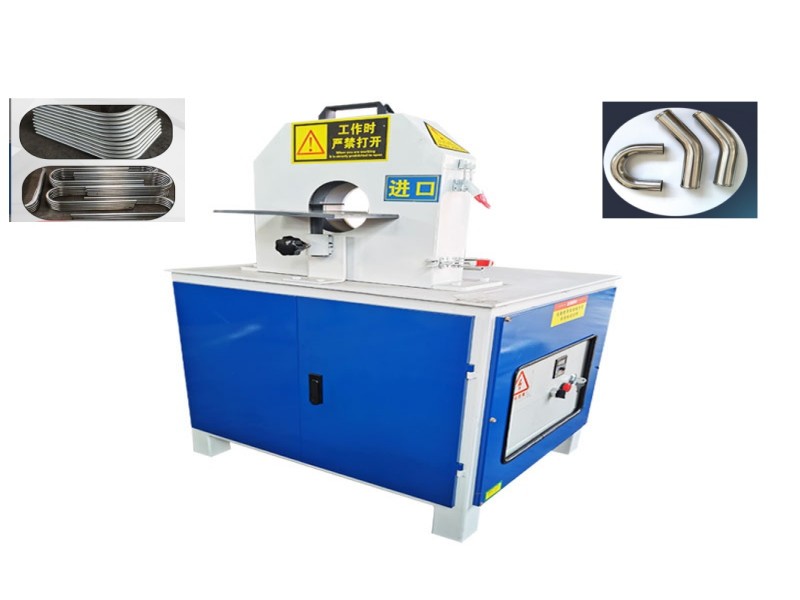
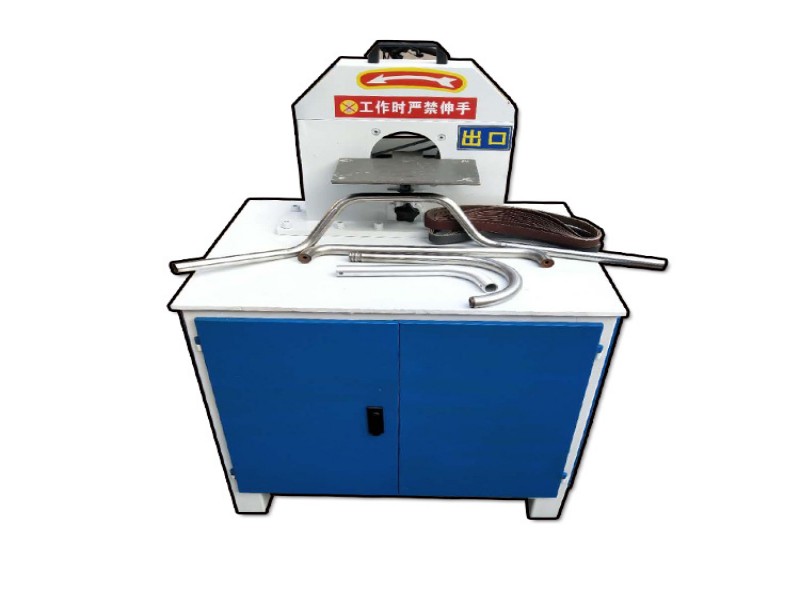
Full Automatic Steel Tube Polishing Machine
In many industrial polishing applications, machines are designed specifically for cylindrical workpieces such as metal pipes. A typical example is the Full Automatic Steel Tube Polishing Machine, which is engineered for grinding and polishing the external surfaces of round and curved metal tubes. Unlike general polishing equipment, this machine integrates precision motion control and automated feeding mechanisms to ensure stable surface finishing quality.
The machine is particularly suited for processing metal tubes with different shapes, including straight pipes, bent pipes, and oval tubes. Its mechanical design focuses on achieving consistent polishing accuracy while maintaining efficient processing speed. The system is built with a compact structure and controlled polishing movement to ensure reliable operation in industrial environments.

Core Technical Parameters
The following table summarizes the key technical specifications of this tube polishing machine.
Parameter | Specification |
No-load speed | 2800 rpm |
Rated power | 3 kW |
Power supply | 380V / 220V optional |
Machine weight | 130 kg |
Processing diameter | 10–100 mm (customizable) |
Processing accuracy | 0.05 mm |
Grinding wheel diameter | 250 mm / 300 mm optional |
Machine dimensions | 700 × 650 × 1080 mm |
These parameters indicate that the machine is designed for stable medium-to-high precision polishing operations. The adjustable processing diameter allows it to accommodate a range of tube sizes, while the grinding wheel configuration supports different surface finishing requirements.
Structural and Functional Features
Beyond its basic technical specifications, the machine integrates several structural features that improve polishing performance and operational flexibility.
● Planetary motion polishing system The polishing mechanism uses a planetary motion structure that allows the polishing heads to move around the tube surface. This design enables effective polishing of bent or curved tubes without rotating the workpiece itself, ensuring stable contact between the polishing wheel and the tube surface.
● Stepless variable frequency speed control The polishing speed can be adjusted continuously through a frequency control system. This allows operators to match the polishing speed to different materials and finishing conditions while maintaining consistent surface quality.
● Automatic feeding system The machine can be equipped with an automatic feeding mechanism that transports tubes through the polishing station. This configuration supports continuous processing and helps maintain uniform polishing results across multiple workpieces.
● Flexible polishing configuration The system supports optional configurations such as multiple polishing heads, wet polishing systems, and dust extraction equipment. These options allow the polishing process to be adjusted according to specific production requirements.
How a Polishing Machine Works
A polishing machine operates by combining controlled mechanical motion with abrasive materials to gradually refine a workpiece surface. Instead of removing large amounts of material like cutting or grinding equipment, polishing focuses on eliminating microscopic irregularities. The process smooths the peaks of the surface texture and fills minor valleys through repeated friction between polishing tools and fine abrasives.
During operation, the machine’s motor drives polishing tools—such as pads, belts, or wheels—so they move across the surface in a rotating, oscillating, or orbital pattern. At the same time, polishing compounds containing extremely fine abrasive particles are applied between the tool and the workpiece. These particles slowly remove tiny layers of material and progressively improve surface smoothness.
The polishing action can be understood as a controlled micro-material removal process. Over time, the repeated movement of abrasive particles reduces surface roughness and produces a consistent finish. Because polishing removes only a very small amount of material, it is typically used as the final stage of surface finishing after machining, grinding, or lapping.
Polishing Machine Working Principle
The working principle of a polishing machine is based on three coordinated elements: mechanical motion, abrasive interaction, and controlled pressure. Together, these elements allow the machine to achieve precise surface refinement without damaging the underlying structure of the material.
When the polishing machine starts operating, the motor transfers power to the polishing head through a drive system. This head carries the polishing pad or abrasive tool and moves across the workpiece surface. As the tool rotates or oscillates, the abrasive particles embedded in polishing compounds rub against the material surface.
This interaction gradually removes microscopic surface peaks. Because the abrasive particles are extremely small, the material removal rate is very low, which allows the process to produce smooth and reflective finishes without altering the shape of the component.
The table below summarizes the key elements involved in the polishing mechanism.
Working Element | Role in the Polishing Process |
Mechanical motion | Drives the polishing tool across the surface to distribute abrasive action evenly |
Abrasive particles | Remove microscopic irregularities and reduce surface roughness |
Lubricating slurry or compound | Carries abrasives and reduces excessive friction during polishing |
Controlled pressure | Ensures stable contact between the polishing tool and the workpiece |
This combination of motion, abrasives, and pressure allows polishing machines to create highly refined surfaces that meet both aesthetic and functional requirements.
Polishing Process Step by Step
Although polishing machines may vary in design, the polishing process generally follows several structured steps. Each stage plays an important role in achieving the desired surface finish.

1. Surface Preparation Before polishing begins, the workpiece must be cleaned to remove dust, oil, or residue left from previous machining processes. Contaminants on the surface can interfere with the polishing action and may even introduce new scratches. Proper preparation ensures that the abrasive particles interact directly with the material.
2. Application of Polishing Media A polishing compound, slurry, or abrasive paste is applied either to the polishing tool or directly to the workpiece surface. The composition of the polishing media determines the aggressiveness of the process. Coarser compounds are used in early stages, while finer compounds produce high-gloss finishes.
3. Mechanical Polishing Action Once the machine begins operating, the polishing tool moves across the surface while maintaining controlled pressure. The abrasive particles embedded in the compound rub against the surface, gradually removing microscopic layers of material. As polishing continues, the surface becomes progressively smoother.
4. Final Surface Refinement In the final stage, extremely fine polishing compounds may be used to further reduce surface roughness and enhance reflectivity. The goal is to achieve a uniform finish with minimal visible imperfections.
These steps allow polishing machines to transform rough or matte surfaces into smooth finishes suitable for demanding industrial applications.
Main Components of a Polishing Machine
A typical polishing machine is composed of several key components that work together to maintain stable polishing performance. Each part contributes to controlling the motion, pressure, and precision required during the finishing process.
Motor and Drive System The motor provides the primary source of power for the polishing machine. It converts electrical energy into mechanical rotation and drives the polishing tool through shafts, belts, or gear systems. Many machines allow adjustable speed control, enabling operators to adapt the polishing intensity according to different materials and surface conditions.
Polishing Tools Polishing tools are the components that directly contact the workpiece. These tools can include foam polishing pads, fabric wheels, abrasive belts, or specialized brushes. Different tools are selected depending on the required surface finish. Soft pads are often used for fine finishing, while abrasive wheels may be used during earlier polishing stages.
Control and Adjustment System Modern polishing machines often include control mechanisms that regulate parameters such as rotational speed, pressure, and polishing time. These systems help maintain process stability and ensure consistent surface results across multiple workpieces. In automated systems, programmable controls may also coordinate feeding mechanisms and polishing cycles.
Types of Polishing Machines Used in Manufacturing

In modern manufacturing environments, different types of polishing machines are used depending on the surface finishing requirements, workpiece geometry, and production scale. Each machine type applies a different motion pattern or polishing mechanism to achieve the desired surface quality. While some machines focus on aggressive material removal, others are designed for controlled finishing and delicate surface treatment.
Selecting the correct polishing machine is important because surface finishing quality depends on factors such as motion control, polishing pressure, and the interaction between abrasives and the material. For example, heavy industrial polishing often requires machines capable of removing deeper scratches, whereas precision finishing may rely on machines designed to produce smoother, mirror-like surfaces.
The most commonly used polishing machines in manufacturing include rotary polishing machines, orbital or dual-action polishing machines, and bench polishing machines. Each category serves different operational needs and polishing applications.
Rotary Polishing Machines
Rotary polishing machines are among the most widely used types of polishing equipment in industrial finishing processes. These machines operate using a polishing pad or abrasive wheel that rotates continuously in a single circular direction. The constant rotation generates strong friction between the polishing tool and the surface of the workpiece, which allows the machine to remove deeper scratches and machining marks efficiently.
Because rotary machines produce high mechanical energy, they are commonly used for more demanding polishing tasks. For example, they are frequently applied in metal finishing, automotive restoration, and heavy surface correction. The strong rotational motion enables operators to quickly level uneven surfaces before finer polishing steps are performed.
From a technical perspective, rotary polishing machines are valued for their efficiency and cutting capability. However, they require careful handling because excessive pressure or prolonged polishing in one area may generate heat and damage the material surface.
Key characteristics of rotary polishing machines include:
● Single-direction rotational movement, which concentrates abrasive force on the polishing area and enables effective material removal. This motion makes the machine particularly useful for correcting deep scratches or restoring worn surfaces.
● High polishing power, allowing operators to perform aggressive polishing tasks on metals and other durable materials. Because the machine delivers consistent rotational energy, it can remove surface defects more quickly than many other polishing methods.
● Professional operation requirements, since improper use can lead to overheating or uneven polishing. Skilled operators often adjust speed, pressure, and polishing compound selection to achieve optimal results.
Orbital or Dual-Action Polishing Machines
Orbital or dual-action polishing machines operate using a more complex motion pattern than rotary machines. Instead of rotating in a single direction, the polishing pad both spins and oscillates simultaneously. This dual movement distributes polishing force more evenly across the surface and helps prevent localized overheating.
Because of this controlled motion, orbital polishers are widely used for finishing surfaces that require greater precision and lower risk of damage. The oscillating movement continuously changes the contact pattern between the polishing pad and the workpiece, reducing the chance of creating swirl marks or uneven polishing lines.
Another advantage of dual-action polishing machines is their operational stability. The oscillating movement prevents the polishing pad from remaining in one position for too long, which improves polishing consistency and surface uniformity.
Important features of orbital polishing machines include:
● Combined rotational and oscillating motion, which spreads abrasive action across a larger surface area. This mechanism helps achieve smoother finishes while reducing the risk of overheating or burning the material surface.
● Improved process control, making these machines suitable for finishing operations where surface appearance is critical. The balanced motion allows operators to polish sensitive materials without causing surface damage.
● Versatility in applications, since orbital polishing machines can be used on various materials such as metal, painted surfaces, plastics, and composite components.
To better understand the differences between rotary and orbital polishing systems, the following comparison highlights their main characteristics.
Machine Type | Motion Pattern | Main Advantage | Typical Use |
Rotary polishing machine | Single circular rotation | Strong polishing power and efficient defect removal | Heavy polishing and scratch correction |
Orbital / dual-action polishing machine | Combined rotation and oscillation | Better control and reduced surface damage | Precision finishing and delicate surfaces |
Bench Polishing Machines
Bench polishing machines are stationary polishing units typically installed on workbenches or dedicated equipment stands. Unlike portable polishing machines, bench polishers are designed for controlled workshop environments where small parts and components require precise surface finishing.
These machines usually consist of a motor mounted inside a rigid base, with polishing wheels attached to both sides of the rotating shaft. The operator holds the workpiece against the polishing wheel while controlling the contact pressure and polishing angle. Because the machine remains fixed in place, bench polishers provide stable polishing conditions and allow for accurate finishing of small components.
Bench polishing machines are particularly useful for polishing metal hardware, mechanical parts, and precision tools. Their compact structure makes them suitable for repair workshops, manufacturing facilities, and maintenance operations where frequent polishing of small parts is required.
Typical characteristics of bench polishing machines include:
● Stationary installation, providing a stable polishing platform that improves operator control. This design allows small workpieces to be polished with greater precision than handheld machines.
● Dual-wheel configuration, where different polishing wheels can be mounted on each side of the machine. One wheel may be used for rough polishing while the other is used for fine finishing.
● Compact industrial design, enabling efficient polishing of small parts such as metal fittings, tools, and mechanical components within a workshop environment.
Key Factors That Affect Polishing Results
The quality of a polished surface depends on more than the polishing machine itself. In practical production, the final result is influenced by several interacting variables, including the abrasive materials, machine operating parameters, and surface preparation of the workpiece. Even when the same polishing equipment is used, differences in these factors can change the surface roughness, polishing efficiency, and visual appearance of the finished part.
Understanding and controlling these variables allows manufacturers to maintain consistent polishing performance while avoiding unnecessary material removal or surface damage.
Abrasive Materials
Abrasives are the main agents responsible for removing microscopic surface irregularities during polishing. As the polishing tool moves across the workpiece, abrasive particles slide and roll over the surface under controlled pressure. This gradually reduces surface peaks and produces a smoother, more uniform finish.
Different abrasive materials have different hardness levels and polishing characteristics. Selecting the correct abrasive is therefore essential for achieving the desired polishing result.
Abrasive Type | Characteristics | Typical Use |
Aluminum oxide (Al₂O₃) | Hard and durable abrasive | General metal polishing |
Cerium oxide (CeO₂) | Effective chemical–mechanical interaction | Glass and optical polishing |
Silicon dioxide (SiO₂) | Very fine polishing particles | Ultra-smooth finishing |
Diamond powder | Extremely high hardness | Precision polishing of hard materials |
Particle size is also important. Coarser particles remove material quickly but may leave marks, while finer particles produce smoother finishes but require longer polishing time.
Machine Speed and Pressure
The relationship between machine speed and polishing pressure strongly affects polishing performance. These parameters control how effectively abrasive particles interact with the workpiece surface.
Higher rotational speeds can improve polishing efficiency by increasing the movement of abrasive particles across the surface. However, excessive speed may generate heat and damage sensitive materials. Similarly, polishing pressure must be balanced: insufficient pressure reduces polishing effectiveness, while excessive pressure can create uneven marks.
Key operational parameters include:
● Rotational or oscillation speed – determines polishing efficiency and abrasive movement
● Contact pressure – controls the depth of abrasive interaction with the surface
● Polishing time – influences the final surface smoothness and finish quality
Proper adjustment of these parameters ensures stable polishing results.
Surface Preparation
Surface preparation plays a critical role in successful polishing. Before polishing begins, the workpiece must be clean and free from contaminants. Dust, grease, or large particles trapped between the polishing tool and the surface can create additional scratches during polishing.
Effective preparation typically involves:
● Cleaning the workpiece to remove oil, dust, and residues
● Ensuring a uniform pre-finished surface through grinding or lapping
● Maintaining a clean polishing environment to prevent contamination
In high-precision polishing applications, controlling environmental cleanliness is especially important because even small particles can affect the final surface quality.
Conclusion
A polishing machine improves surface quality and removes scratches and imperfections to create smooth finishes. It uses controlled motion and abrasives to achieve stable and efficient surface treatment.
Understanding how polishing machines work helps manufacturers choose suitable finishing equipment. Huzhou Antron Machinery Co., Ltd. provides reliable polishing machines with stable performance and flexible solutions for industrial polishing needs.
FAQ
Q: What is a polishing machine used for?
A: A polishing machine smooths surfaces and removes scratches, oxidation, and burrs from materials like metal, glass, and plastic.
Q: How does a polishing machine work?
A: A polishing machine uses rotating pads or wheels with abrasives to gradually remove microscopic surface layers.
Q: What materials can a polishing machine process?
A: A polishing machine can process stainless steel, aluminum, glass, plastic, and stone in surface finishing operations.
Q: What factors affect polishing machine results?
A: Polishing machine results depend on abrasive type, machine speed, pressure control, and the preparation of the workpiece surface.