Manual surface finishing often creates a highly variable, labor-intensive bottleneck on the production floor. It compromises tight dimensional tolerances and eats directly into your profit margins. Hand deburring simply cannot keep pace with modern manufacturing demands. Workers get fatigued, leading to inconsistent part quality.
This is where mass finishing steps in as an automated, batch-processing method. Manufacturers use it to deburr, descale, polish, or radius large volumes of parts simultaneously. The process mechanically conditions surfaces uniformly across entire batches, removing the subjectivity of human hands.
Moving from manual processing to an automated mass finishing machine requires careful planning. You must align specific part geometries, required surface finishes (Ra values), and production volumes. Below, we will explore how to match the correct equipment and media chemistry to your unique operational needs.
Key Takeaways
Mass finishing replaces subjective manual deburring with highly repeatable, scalable surface conditioning.
Selecting the right mass finishing machine depends on part fragility, production volume, and required cycle times—ranging from standard vibratory bowls to high-energy centrifugal barrels.
Total cost of ownership extends beyond the machine to include media consumption rates, compound chemistry, and wastewater/effluent compliance.
Never finalize an equipment purchase without conducting a documented sample processing trial to verify media-to-part ratios and cycle times.
The Business Case: Why Operations Upgrade to Mass Finishing
Manufacturers constantly seek ways to optimize production lines. Individual part handling creates massive inefficiencies. Operators vary in skill and stamina. This variance leads to unpredictable output quality. Transitioning to batch processing changes the entire equation.
The primary success criterion is achieving isotropic surface finishes. An isotropic finish means the surface texture is uniform in all directions. Manual grinding leaves directional scratch patterns. These patterns can create stress concentrators on a metal part. Automated batch processing creates a non-directional, uniform finish. This improves part performance and extends component lifespan.
Labor reduction stands out as a massive operational driver. Manual deburring relies heavily on human judgment. A worker might over-polish one area. They might miss a burr entirely on the next part. This inconsistency directly inflates your scrap rates. Automated systems eliminate these human errors. You program the cycle time. The machine executes it perfectly every single run.
Scalability forms the third pillar of this business case. Your production orders might double overnight. Scaling manual finishing requires hiring more staff. You must buy more benches. You must consume more floor space. A high-capacity system handles increased throughput effortlessly. You simply process larger batches. Your headcount remains stable, and your operational footprint barely changes.
Solution Categories: Comparing Mass Finishing Machine Technologies
Engineers must match machine dynamics to part specifications. No universal solution exists in surface processing. Every technology offers distinct advantages and inherent physical limitations.
Vibratory Finishing Machines (Bowls and Tubs)
Vibratory processing dominates the industry today. It provides reliable, general-purpose deburring. Bowls handle small to medium parts exceptionally well. Tubs accommodate large, long, or oddly shaped components. A heavy-duty motor generates high-frequency vibrations. This action causes media and parts to scrub against each other in a toroidal (corkscrew) rolling pattern.
Best for: Automated continuous processing and general deburring tasks.
Trade-offs: Cycle times run longer compared to high-energy machines. You must select media carefully to prevent parts from hitting each other.
Best Practice: Always keep the vibratory bowl adequately filled. Underfilling causes erratic rolling dynamics. It significantly increases the risk of part impingement.
Centrifugal Barrel and Disc Machines (High-Energy)
Some parts require extremely aggressive material removal. Others demand flawless mirror finishes. High-energy centrifugal systems deliver both. They spin internal barrels or discs at high speeds. This generates centrifugal forces up to 30 times the force of gravity. The resulting friction is incredibly intense.
Best for: High-value precision parts. Aerospace turbine blades and medical implants fit perfectly here.
Trade-offs: Initial capital expenditure runs higher. Batch capacities are physically smaller. Maintenance is more complex due to high-speed bearings.
Rotary Barrel Tumbling
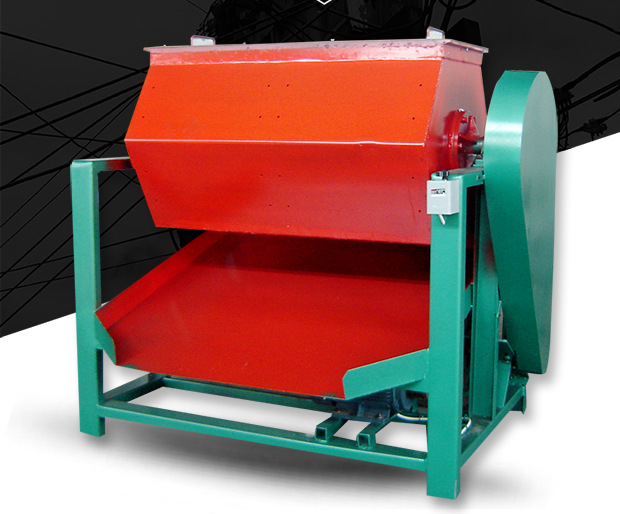
Rotary tumbling represents the oldest method. A simple hexagonal or octagonal barrel rotates slowly. Gravity pulls the entire load upward. The load then slides down over itself continuously.
Best for: Heavy radiusing and edge breaking. It works perfectly when cycle time does not constrain your production.
Trade-offs: The mechanical action is extremely slow. Automating part-media separation proves difficult compared to vibratory bowls.
Technology Type
Typical Cycle Time
Action Intensity
Primary Application
Vibratory Bowls/Tubs
2 to 8 hours
Moderate
General deburring, smoothing
Centrifugal High-Energy
10 to 30 minutes
Very High
Precision polishing, hard metals
Rotary Barrel Tumbling
6 to 24 hours
Low
Heavy radiusing, part-on-part
The "Art and Science" of Media and Compound Selection
Hardware only solves half the problem. The consumables dictate the final surface condition entirely. You must balance abrasive media types and compound chemistry accurately. Industry experts often call this the "art and science" of the process.
Abrasive Media Types
The media performs the actual cutting or burnishing work. Its physical composition determines the aggressiveness of the cut. Size and shape matter just as much as the material itself.
Ceramic Media: This provides highly aggressive cutting action. We use it primarily for hard metals like steel and titanium. It removes heavy burrs rapidly.
Plastic Media: This offers a softer cutting dynamic. It works beautifully on non-ferrous metals like aluminum or zinc. It prevents surface rolling or peening on soft edges.
Steel/Stainless Media: This media does not remove material. We use it strictly for burnishing and polishing. It compresses the part surface to yield a bright, high luster.
Compound Chemistry (Wet vs. Dry Finishing)
Fluids play a critical role in the finishing ecosystem. They regulate the entire environment inside the bowl.
Most operations utilize wet processing. You introduce water and chemical compounds directly into the machine. The compound provides essential lubricity. It inhibits flash corrosion on ferrous metals. Crucially, it suspends microscopic particulate matter. This carries dirt and metal fines away from the clean parts.
Some materials simply cannot tolerate moisture. Dry processing utilizes specialized abrasive pastes or treated organic media. Walnut shells and corn cobs are highly common examples. You use dry methods when moisture introduces severe oxidation risks. It also helps navigate strict local effluent compliance issues.
Chart 1: Media Selection Matrix
Media Material
Processing Method
Target Metal Category
Ceramic Triangles/Cylinders
Wet Processing
Ferrous (Steel, Iron, Titanium)
Plastic Cones/Pyramids
Wet Processing
Non-Ferrous (Aluminum, Brass)
Treated Walnut Shells
Dry Processing
Delicate/Oxidation-Prone Metals
Evaluation Dimensions: Sizing and Sourcing Your Equipment
Purchasing the wrong size unit ruins project returns. Sizing requires careful geometric and mathematical analysis. You cannot guess volume requirements.
Production Throughput vs. Machine Capacity
You cannot fill a bowl entirely to the brim. You must calculate the true working capacity. A machine typically operates optimally at 40-60% of its total bowl volume. You must also determine the correct media-to-part ratio. A common starting ratio is 3:1 by volume. Fragile parts might require a strict 6:1 ratio to ensure safety.
Automation and Integration
Modern facilities demand minimal operator touchpoints. Evaluate internal separation screens carefully. An automated mass finishing machine often includes acoustic covers and media return conveyors. Operators simply dump raw parts into a hopper. The system autonomously unloads finished parts directly onto a heated drying belt.
Footprint and Facility Requirements
These industrial machines are incredibly heavy. You must assess floor weight limits beforehand. Wet systems require reinforced concrete flooring. You also need specific electrical power drops. High-energy centrifugal motors draw significant starting amperage. Do not forget noise abatement. Vibratory processing creates deafening ambient noise levels. Sound-dampening enclosures remain mandatory for worker safety.
Compliance and Environmental Impact
Wet processing generates continuous effluent. This wastewater contains heavy metal fines, abrasive sludge, and residual chemical compounds. You must plan for effluent management early in the project. Direct draining to municipal sewers often violates local environmental regulations. Many facilities evaluate closed-loop wastewater recycling systems. These systems centrifuge the toxic sludge. They then return clean water back into the active process.
Implementation Risks and Hidden Costs to Avoid
Deploying a new system involves operational risks. Unforeseen daily challenges can derail production schedules. You must proactively identify and mitigate these specific hazards before they happen.
Part Impingement
Heavy or highly complex parts can collide inside the bowl. We call this impingement. It causes dents, deep scratches, and ultimately rejected parts. You mitigate this risk by adjusting media sizing carefully. You also must fine-tune water flow rates and motor weights. A higher media-to-part ratio physically isolates the components from each other.
Media Lodging
Undersized media easily jams in blind holes. It wedges tightly into narrow slots. Removing lodged media manually defeats the entire purpose of automation. You must conduct strict geometric analysis before specifying your media. The media must be significantly larger or significantly smaller than any hole on your part.
Common Mistake: Many engineers ignore the media attrition rate. Media shrinks naturally as it wears down. A perfectly sized ceramic triangle will eventually shrink. It will wedge into a part hole weeks later. You must classify and filter old media regularly.
Media Wear and Attrition
Consumable breakdown represents an ongoing operational expense. You must factor this attrition into your monthly operating budgets. Furthermore, degrading media creates thick abrasive sludge. You must schedule regular machine clean-outs. Ignoring this basic maintenance allows sludge to harden like concrete. It will clog drains and overheat the motor.
Urethane Lining Degradation
The internal tub features a thick cast urethane lining. This lining protects the external steel tub from the abrasive media. It does not last forever. You must monitor its physical lifespan carefully. Chemical compound pH directly impacts urethane longevity. Highly acidic or highly alkaline compounds accelerate degradation. Friction from aggressive ceramic media also wears the lining down. Re-lining a bowl requires significant machine downtime.
Shortlisting Logic: Next Steps for Procurement Engineers
Procurement requires highly structured logic. Do not base purchasing decisions on glossy brochure specifications alone. You need hard, verifiable evidence before cutting a purchase order.
The Sample Processing Trial
Never skip the physical sample test. A vendor must process your raw parts in their own lab. They must return the finished parts to you with documented data. You need before-and-after Ra (Roughness Average) surface measurements. You need exact cycle times. You must verify the specific media-to-part ratios they used. This empirical data is absolutely mandatory before any capital approval.
Vendor Support Evaluation
The relationship actually begins after the sale. Assess the supplier’s ongoing technical support capabilities. Can they provide continuous chemistry consultations? Do they stock replacement media locally? Will they send field technicians for localized machine maintenance? Unplanned downtime costs massive amounts of money. You need a responsive, deeply knowledgeable partner.
Defining the Spec Document
Accelerate your RFP process by finalizing a rigid specification document. Include precise part dimensions and weights. State the target surface finish explicitly. Detail your required daily processing volume. Outline your exact budget constraints. Clear, uncompromising requirements force vendors to quote accurate, comparable solutions.
Conclusion
Successful mass finishing requires a carefully engineered ecosystem. You must seamlessly combine the machine, the media, and the compound chemistry.
Solving your surface finishing bottleneck yields compounding returns. You instantly improve dimensional quality control and achieve massive labor savings.
Do not assume one machine handles every part. Scale your equipment choices to your most delicate components and your highest production volumes.
Factor in the physical footprint, noise abatement needs, and stringent wastewater compliance regulations before finalizing a facility layout.
Take the next logical step toward production automation. Define your specific process parameters and geometry constraints today. Reach out to a qualified finishing engineer. Request a custom sample test. Seeing your exact parts processed flawlessly provides the ultimate proof of concept.
FAQ
Q: What is the difference between tumbling and mass finishing?
A: Tumbling is a specific, older subset of the industry. It usually refers to rotary barrels relying on gravity. Modern mass finishing encompasses highly advanced, faster methods. These include vibratory bowls and high-energy centrifugal processing. They offer vastly superior speed and control.
Q: How long does a typical mass finishing cycle take?
A: The cycle time is highly variable. Centrifugal high-energy machines can finish parts in 10 to 30 minutes. Standard vibratory processing may take 2 to 8 hours. It depends entirely on the initial burr size, part hardness, and your target surface finish.
Q: Can delicate or complex parts undergo mass finishing?
A: Yes. You can process delicate parts safely. You must use high-density, non-abrasive media to protect them. You can also utilize specific fixturing systems within tubs. Centrifugal disc machines are also designed precisely to prevent part-on-part contact during processing.