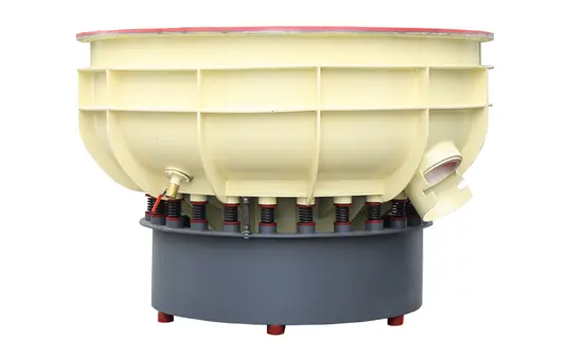
Metal 3D Printing Leaves Layer Lines and Rough Surfaces
Metal additive manufacturing has transformed the way engineers and manufacturers approach complex part production. Technologies such as Direct Metal Laser Sintering (DMLS), Selective Laser Melting (SLM), and Electron Beam Melting (EBM) now allow for the creation of intricate geometries, lightweight lattice structures, and customized components that are nearly impossible to produce through traditional methods.
However, one of the biggest challenges that persists with metal 3D printing is surface quality. Even the most advanced metal printers produce parts with visible layer lines, powder residue, and rough textures. These imperfections are more than just cosmetic—they can impact the mechanical properties, fatigue resistance, and overall performance of the final part.
To bridge the gap between raw printed parts and functional end-use components, post-processing is essential. Among various finishing techniques available, vibratory finishing stands out for its ability to deliver consistent, non-destructive, and efficient surface improvements across a wide range of metal geometries.
Challenges in Post-Processing: Irregular Geometry, Internal Channels, and Rough Textures
While metal 3D printing offers design freedom, it also introduces significant post-processing hurdles. The unique way additive manufacturing builds parts—layer by layer—leads to a set of finishing challenges that are not typically found in conventional machining or casting.
1. Irregular and Complex Geometries
Many 3D-printed metal parts feature free-form surfaces, lattice structures, overhangs, and recessed areas that are difficult to reach with conventional grinding, sanding, or polishing tools. These complex geometries often trap excess powder or develop support structures that must be removed carefully to avoid damaging the component.
2. Internal Channels and Hollow Sections
Functional parts such as heat exchangers, fluid manifolds, and biomedical implants often include narrow internal channels. These areas are critical for performance but nearly impossible to finish using manual techniques. Any residual powder, burrs, or surface roughness inside these cavities can compromise the function of the final product.
3. High Surface Roughness and Layer Lines
Because metal additive processes like SLM and DMLS sinter powder in layers, they inherently create visible layer lines and micro-roughness on the surface. Depending on the orientation during printing and the laser or beam quality, surface roughness can range from Ra 5 µm to over 20 µm—far too coarse for applications that require sealing, wear resistance, or smooth mating surfaces.
4. Delicate Features That Are Easily Damaged
Unlike machined parts that are typically robust and symmetrical, 3D-printed components may have fine details, thin walls, or support-removal scars that require gentle handling. Aggressive deburring or blasting methods can deform or break these fragile features, making a non-destructive, controlled finishing method critical.

Why Vibratory Finishing Works: Non-Destructive Surface Smoothing, Media Flexibility, and Even Finish
Vibratory finishing has become a preferred method for post-processing 3D-printed metal parts due to its unique ability to address the complex challenges these components present. Unlike abrasive blasting or manual polishing, vibratory finishing offers a gentle, uniform, and scalable surface treatment that preserves the integrity of delicate geometries.
1. Non-Destructive Surface Smoothing
One of the biggest advantages of vibratory finishing is its ability to smooth surfaces without damaging fine features or altering critical dimensions. Parts are placed in a vibrating container filled with specially selected media and compounds, which gently polish the surface through constant, controlled friction and abrasion. This reduces roughness, removes residual powder, and smooths layer lines without aggressive material removal.
This non-destructive approach is especially vital for 3D-printed components with intricate shapes or thin walls, where excessive machining or grinding can cause warping, deformation, or even breakage.
2. Media Flexibility for Different Finishing Needs
Vibratory finishing uses a wide range of media types — from ceramic, plastic, to steel— each tailored to different levels of abrasiveness and surface finishes. This flexibility allows operators to:
Select fine media for delicate polishing on jewelry-like metal parts.
Use medium abrasive ceramic for smoothing rougher surfaces and removing support remnants.
Apply heavy-duty media for deburring sharp edges or smoothing cast-like textures.
This adaptability means a single vibratory finishing machine can be paired with different media to handle various 3D-printed metals (such as stainless steel, titanium, aluminum) and meet specific surface finish requirements.
3. Consistent and Even Surface Finish
The vibratory action ensures that all parts inside the finishing bowl receive uniform contact with the media, resulting in an even finish across complex geometries. Unlike manual sanding, which is time-consuming and inconsistent, vibratory finishing delivers repeatable surface quality with minimal human intervention.
This uniformity is crucial for aerospace, medical, and automotive parts where surface integrity directly influences performance and reliability.
Media and Machine Type Suggestions: Small Abrasive Ceramic for Tight Geometry; Compact Bowl Machines for Lab Use
Selecting the right media and machine type is critical to achieving optimal results in vibratory finishing of 3D-printed metal parts. The intricate geometries and delicate features common in additive manufacturing require careful consideration to ensure thorough finishing without damage.
1. Small Abrasive Ceramic Media for Tight Geometry
For parts with complex shapes, fine details, and internal channels, small abrasive ceramic media is the preferred choice. Ceramic media is durable and can be formulated with varying abrasiveness, allowing it to gently remove surface irregularities and residual powders without excessive material removal.
The small size of the media particles enables access to narrow crevices and internal passages that are typical in 3D-printed parts.
Ceramic media also minimizes the risk of media contamination and is easy to separate from the parts after finishing.
It provides an excellent balance between aggressive deburring and fine polishing, making it versatile for various stages of post-processing.
2. Plastic and Synthetic Media for Gentle Finishing
In some cases, particularly for highly delicate parts or those requiring a bright, polished surface, plastic or synthetic media can be used. These softer media types reduce the risk of scratching and are ideal for finishing lightweight or thin-walled components.
3. Compact Vibratory Bowl Machines for Lab and Small-Scale Production
For prototype development, research, or small-batch production, compact vibratory bowl machines offer a space-efficient and cost-effective solution. These desktop-sized units provide:
Easy setup and operation, suitable for laboratories and small workshops.
Precise control over finishing parameters such as vibration intensity and cycle duration.
Compatibility with various media types to adapt to specific finishing needs.
Compact machines are particularly useful during the early stages of product development, allowing engineers to fine-tune surface finishes before scaling up to larger production equipment.
4. Larger Automatic Vibratory Machines for Batch Processing
When moving to full-scale production, larger automatic vibratory finishing machines equipped with separators and programmable controls become essential. These machines handle higher volumes, offer consistent repeatability, and reduce manual labor.
Antron Machinery provides a range of machines from compact desktop models to robust automatic vibratory finishers, enabling seamless scaling from prototype to production.
Conclusion: Vibratory Finishing — Essential for Transforming 3D-Printed Prototypes into Functional Components
The journey from a raw 3D-printed metal prototype to a high-quality, functional component hinges critically on effective post-processing. Vibratory finishing machines play an indispensable role in this transformation by delivering consistent, non-destructive surface smoothing, removing roughness, and enhancing the part’s aesthetic and mechanical performance.
Thanks to their adaptability, vibratory finishers accommodate the complex geometries and intricate details typical of additive manufacturing. With the right combination of media and machine type—such as small abrasive ceramics in compact bowls for delicate parts or more robust systems for larger batches—vibratory finishing ensures that components meet demanding industry standards.
For manufacturers and engineers seeking reliable, efficient post-processing solutions, investing in vibratory finishing technology is not just a choice—it’s a necessity. Leveraging advanced machines like those offered by Huzhou Antron Machinery Co., Ltd. ensures precision, scalability, and quality, helping turn innovative designs into durable, market-ready products.