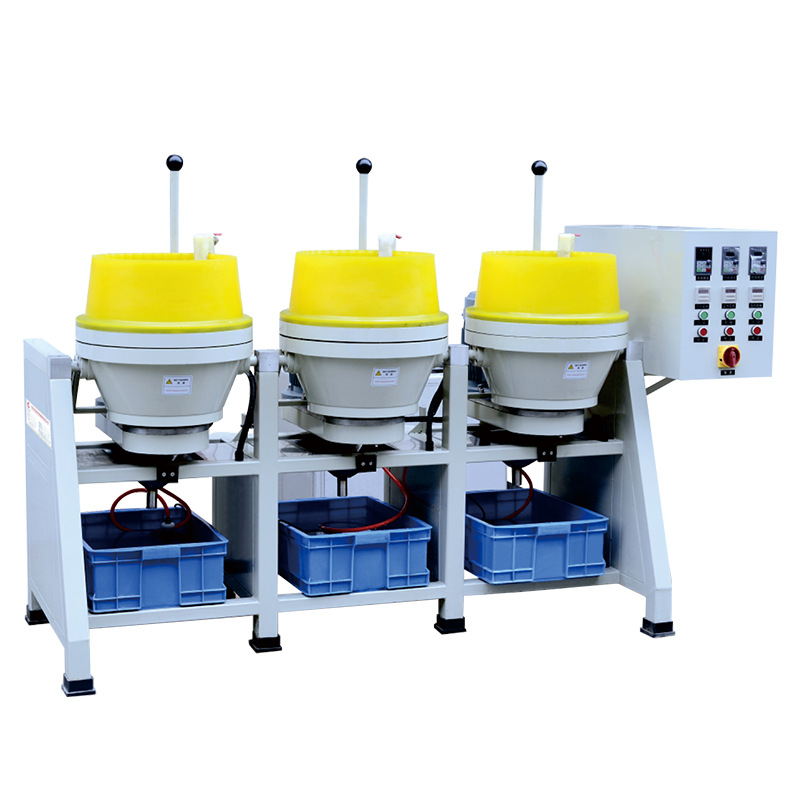
Manual deburring and polishing scale poorly. They introduce unacceptable variance in part quality. Relying on hand tools limits your production growth. Upgrading to an automated mass finishing process reduces your labor dependency. It ensures highly consistent surface finishes across thousands of components. However, selecting the wrong equipment carries heavy operational risks. You might face damaged parts, excessive media consumption, or strict facility compliance issues.
We built this practical, evidence-based framework to help you navigate these challenges. You will learn how to evaluate and shortlist the exact equipment needed for your operations. We cover everything from evaluating complex metal geometries to determining daily production volumes. By following this guide, you can confidently integrate automated finishing systems that match your specific manufacturing requirements.
Key Takeaways
Machine selection must be driven by part geometry, target Ra (Roughness average), and daily throughput requirements, rather than baseline equipment cost.
Vibratory bowls serve as the industry standard for continuous, general-purpose processing, while tub finishers are required for long, fragile, or heavy components.
Centrifugal systems offer cycle times up to 10x faster than vibratory options but require a higher initial capital expenditure and strict load balancing.
Never finalize a machine purchase without requiring the OEM to perform a documented sample processing test using your actual parts.
Defining Your Success Criteria and Production Constraints
Every successful equipment deployment begins with clear parameters. You must define what success looks like before you evaluate any hardware. We recommend a structured approach to document your current state and your future needs. This upfront work prevents mismatched equipment purchases.
Establish the baseline: Document your current per-part cost. Record the exact cycle time of your existing finishing methods. You need these metrics to measure future efficiency gains. Without a baseline, you cannot validate your process improvements.
Define surface finish targets: Clearly identify your required outcome. Differentiate between heavy deburring and simple radiusing. Edge breaking requires far less aggressive action than heavy descaling. High-gloss polishing demands entirely different media and compound combinations. Note your target Ra (Roughness average) specifications.
Calculate throughput limits: Determine your required daily production volume. Assess whether your facility supports traditional batch processing. Some production lines require continuous inline integration instead. Match your volume expectations to your floor layout.
Identify part vulnerabilities: Note your specific material hardness. Evaluate susceptibility to impingement, which is part-on-part damage during processing. Identify the presence of blind holes or complex internal channels. These features often trap standard media shapes.
Documenting these four criteria filters out incompatible machine types immediately. If you process fragile aerospace components, you automatically rule out aggressive tumbling barrels. If you need inline continuous processing, standard batch tubs will not work. Your part geometries and volume targets must dictate your final machine choice.
Comparing Core Mass Finishing Machine Technologies
Manufacturers rely on three primary technologies to process metal parts. Each machine type utilizes distinct mechanical principles. They cater to different part geometries and production volumes. Understanding these mechanical differences helps you align the technology with your specific needs.
Vibratory Bowl Finishers
Vibratory bowls dominate the metalworking industry. They are best for high-volume, general-purpose deburring. You will commonly use them for polishing small to medium parts. Their versatility makes them extremely popular.
The mechanism relies on a toroidal chamber. This donut-shaped bowl creates a corkscrew rolling action. Motor weights generate vibrations. These vibrations force the media and parts to scrub against each other. The continuous spiral motion ensures even surface treatment.
They offer excellent automation potential. You can easily integrate internal separation decks. These decks automatically sift parts from the media at the end of a cycle. However, they have a downside. They feature relatively slow cycle times compared to high-energy centrifugal systems. Processing a batch might take several hours.
Vibratory Tub Finishers
Vibratory tubs serve a different structural purpose. They are best for long extrusions and heavy shafts. You will often see them processing large aerospace components. Their geometry accommodates oversized parts easily.
The mechanism features a rectangular U-shaped chamber. This design generates a straight rolling action rather than a corkscrew motion. Heavy-duty motors drive the tub to create an aggressive scrubbing environment.
Their primary advantage is spatial flexibility. You can install compartment dividers inside the tub. These dividers isolate delicate parts to prevent impingement. On the downside, they are harder to automate. Part separation typically requires manual intervention or external sorting machinery.
Centrifugal Barrel and Disc Systems
Centrifugal systems deliver immense processing power. They are best for small, complex, or high-value parts. If you require aggressive material removal, you need centrifugal energy. They achieve mirror-like finishes in a fraction of normal cycle times.
The mechanism operates on high G-forces. Barrel systems use a Ferris-wheel principle. Disc systems utilize a spinning bottom rotor against a stationary wall. These high-speed rotations generate forces up to 30 times standard gravity. This drastically accelerates the finishing action.
They boast exceptionally fast cycle times. You can achieve precise isotopic finishes in minutes instead of hours. However, they carry strict maintenance requirements. In disc systems, you must carefully monitor and maintain the gap rings. Failure to do so allows small parts to jam the rotating mechanism.
Technology Comparison Chart
Machine Type
Best For
Mechanism
Cycle Time Speed
Vibratory Bowl
High-volume, general small to medium parts
Toroidal corkscrew rolling
Slow to Moderate
Vibratory Tub
Long extrusions, heavy shafts, fragile parts
Rectangular straight rolling
Moderate
Centrifugal System
Complex, high-value parts requiring high gloss
High G-force rotation (Ferris-wheel or spinning rotor)
Extremely Fast
Key Evaluation Dimensions for Equipment Selection
Once you select a core technology, you must size the equipment correctly. You also need to evaluate its automation features and media tolerance. Overlooking these dimensions often results in production bottlenecks.
Capacity and Volumetric Sizing
Many buyers miscalculate their required machine size. They assume a 100-liter machine holds 100 liters of parts. This is a common and costly mistake. A standard rule of thumb governs volumetric sizing. Your metal parts should generally make up only 20% to 30% of the total machine volume.
The tumbling media and liquid compound take up the remaining space. This ratio ensures adequate cushioning. It prevents parts from colliding and damaging each other. When you evaluate a mass finishing machine, you must size it based on this ratio. Calculate your physical batch size, then multiply it by four or five to find the correct machine volume.
Automation and Material Handling
Labor shortages make automation highly valuable. You should heavily evaluate machine integration capabilities. Look for systems offering built-in acoustic covers. These covers reduce noise and open automatically at cycle completion.
Assess automatic compound dosing systems. Manual dosing leads to inconsistent finishes. Automated pumps inject the exact amount of water and chemical compound needed. Finally, look for integrated media classification screens. These screens automatically separate undersized media. Removing worn media prevents it from lodging into part holes.
Media and Compound Compatibility
Your machine must tolerate different media types. Standard media includes ceramic, plastic, steel, and organic materials. Each material imposes different mechanical stresses on the equipment.
Ceramic media provides excellent deburring but is highly abrasive. Plastic media leaves a smooth finish on softer metals like aluminum. Steel media poses the greatest equipment challenge. It is incredibly dense and heavy. If you plan to use steel media, you must verify the equipment specifications. Heavier media requires robust motor sizing. It also demands specialized heavy-duty machine suspensions to handle the excessive weight.
Implementation Risks and Facility Restrictions
Installing heavy industrial equipment impacts your facility infrastructure. You must account for environmental regulations and physical space limitations. Failing to address these realities can delay your deployment.
Acoustic Compliance and Vibration
You must acknowledge facility realities. Industrial finishing is inherently loud. Parts and media continuously crash against urethane walls. You must evaluate whether the machine requires secondary acoustic enclosures. This ensures you meet OSHA or local equivalent noise exposure limits. These regulations typically cap continuous noise under 85 dBA.
Floor requirements also demand strict attention. You must assess the need for specialized reinforced concrete pads. Heavy machines generate significant dynamic loads. You might need vibration-dampening mounts to prevent structural damage to your facility floor.
Consumables and Wear Parts
Equipment downtime ruins production schedules. You should scrutinize the wear parts before purchase. Lining durability is your primary concern. Examine the thickness and durometer (hardness) of the cast polyurethane lining. Hot-poured polyurethane typically outlasts cold-poured alternatives. It cross-links better during the curing process.
Motor and bearing lifespan represents another major risk. Check for standard, off-the-shelf motor availability. Proprietary motors increase your downtime risk. If a proprietary motor fails, you might wait weeks for an overseas replacement. Standard industrial motors allow for immediate local replacement.
Wastewater and Effluent Management
Wet finishing processes require a strict compliance reality check. They generate metal-laden, chemical effluent. This wastewater contains microscopic metal fines and abrasive dust. You cannot simply dump this into the municipal sewer.
Evaluate your local municipal codes regarding direct drain discharge. Most facilities require a dedicated wastewater strategy. Factor in the necessity of a closed-loop water treatment system. Alternatively, you might need a filtration centrifuge system. These systems capture the heavy metals and recycle the clean water back into the machine.
The Shortlisting Process: Validating with Sample Testing
Theoretical research only takes you so far. You must validate your shortlisted equipment through physical testing. Skipping this step often results in buyer's remorse and failed production targets.
Spec sheets remain insufficient for final decisions. Theoretical processing times rarely match factory floor realities. You will encounter subtle variations in metal alloys. Your stamping or machining burrs will differ from standard test pieces. A 304 stainless steel bracket behaves differently than a 316 stainless steel bracket.
You must implement a strict sample test protocol. Require your shortlisted vendors to process a batch of your raw parts. Send them parts featuring your worst-case burrs. This forces the vendor to prove their equipment capabilities on your actual production materials.
You must extract specific data from this sample test. Do not accept vague success claims. Demand a detailed lab report containing the following metrics:
Exact cycle time: Verify how long it takes to achieve your target finish.
Optimal media shape and size: Ensure the selected media does not lodge into your blind holes or channels.
Compound dilution ratios: Document the exact chemical mix required to prevent part corrosion.
Visual and tactile proof: Measure the returned parts to confirm they meet your requested Ra finish standards.
Conclusion
Choosing a reliable mass finishing machine requires a methodical approach. You must balance your complex part geometry constraints against your daily throughput needs. You also must account for critical facility limitations regarding noise and wastewater.
Avoid fixating solely on the initial sticker price. You must evaluate long-term consumable costs, including media consumption, polyurethane linings, and chemical compounds. These ongoing operational factors dictate your true processing efficiency.
Take action today by gathering a diverse batch of your raw parts. Document your specific target Ra specifications clearly. Contact an application engineer at a reputable manufacturer to schedule a controlled sample finishing test. This physical validation guarantees you select the exact equipment your production floor needs.
FAQ
Q: How long do polyurethane linings typically last in a mass finishing machine?
A: It heavily depends on your daily usage and media type. Ceramic media degrades linings significantly faster than softer plastic media. You can generally expect 3 to 5 years of life under standard 8-hour shift conditions before relining becomes necessary.
Q: What is the difference between wet and dry mass finishing?
A: Wet finishing uses water and chemical compounds to clean parts, suspend fine particles, and inhibit corrosion. Dry finishing avoids liquids entirely. It uses organic media like walnut shells or corn cob primarily for final high-gloss polishing or light deburring of highly delicate parts.
Q: Can a vibratory bowl handle parts that easily tangle?
A: Tangling, often called "nesting," is a common risk for parts like springs or wire forms. While operators can tune vibratory bowls to reduce this, they are not ideal. Centrifugal disc machines or tub finishers with specialized divider plates are far more effective for nesting-prone geometries.