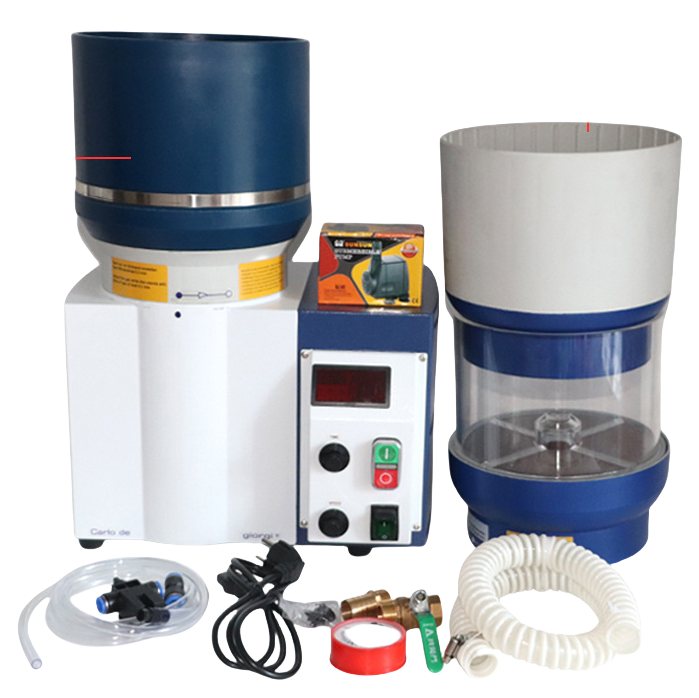
Manufacturing has rapidly shifted from manual deburring to automated mass finishing. You can no longer rely on hand tools to meet modern production demands. Manual methods introduce severe human error. They also inflate labor expenses significantly. We now require processes delivering consistent surface quality. They must reduce manual labor drastically. Furthermore, they need to maintain incredibly tight geometric tolerances across thousands of parts.
This guide moves beyond a basic definition. It provides a comprehensive technical evaluation framework. Engineers and plant managers can use it directly. You will learn how to assess a process for your production line. We will explore process mechanics, equipment selection, and media types. You can confidently integrate the right setup into your facility today.
Key Takeaways
Process Mechanics: Vibratory finishing utilizes a 3D toroidal (corkscrew) action to generate high-frequency friction between media and parts, ideal for internal cavities and fragile components.
Process Selection: It offers faster cycle times and safer handling for delicate parts compared to traditional rotary tumbling.
System Dependencies: A successful setup requires the exact matching of a vibratory finishing machine, abrasive media, and chemical compounds.
Implementation Realities: Total cost of ownership must account for media consumption, acoustic enclosures, and wastewater compliance.
The Mechanics: How Vibratory Finishing Actually Works
Understanding the physics of this process is crucial. The system relies entirely on a three-dimensional corkscrew movement. We call this the toroidal action. Engineers mount offset eccentric weights on a robust motor. As the motor spins, these weights generate intense vibrations. The chamber then shifts rapidly on multiple axes. The entire mass of parts and media moves upward, rolls over, and folds back inward. This continuous loop ensures every single component receives uniform treatment.
You must understand the difference between friction and impact. Traditional tumbling relies on gravity and heavy impacts. Conversely, vibratory finishing creates continuous, localized shearing. We often describe this as a scrubbing action. The media constantly rubs against the part surfaces. It never drops heavily onto fragile geometries. This gentle shearing protects delicate features. It prevents part distortion entirely.
Every process has specific capabilities and boundaries. You must evaluate these carefully before implementation.
Strengths: It excels at deburring, radiusing edges, and descaling surfaces. It also works perfectly for high-luster burnishing. The fluid motion allows media to reach deeply into internal channels.
Limitations: You cannot use it for heavy material removal. It will not alter primary part dimensions. It also cannot repair deep gouges or severe machining defects.
Rotary Tumbling vs. Vibratory Finishing: A Selection Framework
Engineers often confuse tumbling with vibratory processes. They operate on entirely different mechanical principles. Tumbling barrels utilize a line-of-sight, aggressive cascading action. Parts ride up the barrel wall and crash down upon each other. Vibratory bowls offer a fluid-like, continuous motion. The parts remain suspended within the abrasive matrix.
Part compatibility dictates your equipment choice. Tumbling works best for heavy, durable parts. These components must withstand aggressive part-on-part impacts. Vibratory systems are mandatory for fragile components. You also need them for parts containing complex blind holes. If you have strict surface roughness (Ra) targets, you must choose the vibratory method.
Consider the efficiency and cycle time differences. Vibratory systems process parts significantly faster. They typically operate 50% to 75% faster than standard rotary tumbling barrels. This speed directly increases your daily production throughput.
In-process inspection provides a massive operational advantage. Operators cannot safely open a running tumble barrel. However, vibratory equipment allows continuous observation. Operators can safely reach into the moving mass. They can pull a part, inspect the surface, and return it without halting the cycle.
Feature
Rotary Tumbling
Vibratory Finishing
Action Type
Aggressive cascading, high impact
Continuous toroidal, localized shearing
Best For
Durable, heavy metal parts
Fragile parts, strict Ra targets
Cycle Speed
Slower (often several hours to days)
50% to 75% faster
In-Process Inspection
Requires complete machine shutdown
Safe to inspect while running
Evaluating the Core Components of a Vibratory Finishing Machine
You must select the correct equipment style for your application. We primarily categorize these systems into bowls and tubs. Round bowls remain the industry standard. They are ideal for continuous processing. They often feature integrated separation decks. Rectangular tubs serve a entirely different purpose. They are absolutely necessary for exceptionally long parts. You need a tub for bulky or awkwardly shaped items like aerospace spars and camshafts.
Drive systems represent the heart of the machine. You should always mandate Variable Frequency Drives (VFDs). A vibratory finishing machine requires precise tuning. VFDs allow you to control the exact amplitude and frequency. You must adjust these parameters to match varying part requirements. A delicate aluminum part needs different settings than a hardened steel gear.
Pay close attention to the polyurethane lining. High-durometer PU linings play a critical role. They protect the raw steel tub from abrasive wear. They also reduce workplace noise significantly. High-quality linings extend your machine's operational life. You must evaluate the lining thickness carefully. Thicker linings cost more upfront but delay costly replacement intervals.
Finally, evaluate the separation mechanics. Automated part-from-media separation saves countless labor hours. Internal screening systems use built-in ascending ramps. They separate parts and drop the media back into the bowl. External screening systems utilize separate vibrating conveyors. We recommend external screens for highly complex media shapes.
Media and Compounds: Engineering the Right Recipe
You cannot achieve optimal results without the correct media. The abrasive matrix does the actual physical work. We rely on a specific selection matrix to engineer the perfect process recipe.
Ceramic Media: Features a high density and an aggressive cut. We use it for removing heavy burrs on steel or titanium components.
Plastic Media: Offers a lighter density and a very gentle cut. It is ideal for aluminum, zinc, and soft non-ferrous metals. It prevents part impingement entirely.
Steel Media: Completely non-abrasive. We strictly use it for high-luster burnishing. It also provides excellent compressive stress relief.
Organic Media (Cob/Walnut): We use this in heated vibratory dryers. It excels at final polishing and total moisture removal.
Chemical compounds hold the entire process together. You will rarely encounter "dry" processing in industrial settings. Water and chemical compound mixes perform essential duties. They provide vital lubricity between parts. They suspend removed metal fines safely. They prevent flash corrosion on freshly exposed metal. Furthermore, they keep the abrasive pores of the media clean and sharp.
Implementation Realities, Risks, and Compliance
You must address the reality of workplace noise immediately. Industrial finishing machines generate significant sound levels. They almost always exceed the standard 85 dBA threshold. You cannot ignore acoustic management. We highly recommend installing sound-abatement enclosures. You can also equip bowls with heavy acoustic lids. This ensures you maintain a safe, OSHA-compliant environment for your operators.
Environmental compliance dictates your wastewater treatment strategy. You cannot dump untreated effluent directly down the drain. The process generates water heavily laden with metal and media fines. You must install proper treatment infrastructure. Small shops might use simple settling tanks. Larger operations require centrifuges or dedicated flocculation systems. These systems treat and separate the sludge before discharging clear water to the municipal sewer.
You must plan for media wear and potential lodging. Media lodging remains the most common process failure mode. Small abrasive stones can easily jam inside blind holes. You must size your media properly to prevent this. The media must be significantly larger or significantly smaller than your part cavities. Also, remember that media degrades and shrinks over time. A stone might not lodge on day one, but it could jam a month later. You must monitor media degradation constantly.
ROI and Shortlisting Next Steps
You must analyze specific cost-to-benefit variables to justify this investment. Focus your ROI calculations on three primary metrics. First, measure the drastically reduced manual labor hours. Second, calculate the lower scrap rates resulting from eliminating human error. Third, factor in the massive increase in daily production throughput. These variables build a compelling business case for automation.
Never purchase equipment based solely on marketing spec sheets. Sample processing is an absolutely critical step. We strongly advise sending raw parts directly to the OEM. Request professional lab testing. They will run your parts through multiple cycles. They will determine the exact media, machine, and compound recipe you need. This eliminates the guesswork entirely.
Use strict criteria when evaluating OEMs. You need a partner, not just a supplier. Follow this evaluation checklist:
Post-Sale Support: Verify their technical support availability and response times.
Local Replacement Parts: Ensure they have domestic stock for replacement PU linings and spare motors.
Preventative Maintenance Programs: Check if they offer scheduled service visits to calibrate your VFDs and inspect bearings.
Media Supply Chain: Confirm they can supply your specific chemical compounds consistently without backorders.
Conclusion
We must summarize that vibratory finishing is not merely an equipment purchase. It represents the careful integration of a controlled chemical and mechanical process. You must orchestrate the machine, the media, and the compound perfectly. Defining your exact baseline requirement is the mandatory first step. You must know your target cycle time, Ra finish, and throughput volume before making any decisions. Once you define these parameters, take immediate action. Contact a surface finishing engineer today. Arrange a free sample processing test for your specific raw components. This data-driven approach guarantees a successful automated finishing integration.
FAQ
Q: How long does a typical vibratory finishing cycle take?
A: Cycle times vary significantly based on part material and goals. Light polishing on soft metals often requires only 15 to 30 minutes. Heavy radiusing, deburring, or processing hardened steel parts can take several hours. Lab testing determines your precise cycle time.
Q: Can vibratory finishing remove machine lines or tool marks?
A: It can effectively blend minor machine lines and dramatically reduce surface roughness (Ra). However, it does not remove heavy material. Deep tool gouges or severe defects typically require prior mechanical sanding before entering the bowl.
Q: How often does the polyurethane lining need replacing?
A: Lining lifespan depends entirely on usage variables. Highly aggressive ceramic media and 24/7 run hours accelerate wear rapidly. Under standard industrial use, a high-quality polyurethane lining typically lasts between 3 to 5 years before requiring replacement.
Q: Do I need a continuous flow or batch processing system?
A: Your choice depends strictly on production volume. Batch systems work perfectly for high-mix, low-volume operations. Continuous flow systems are necessary for high-volume, automated production lines requiring non-stop part feeding and extraction.