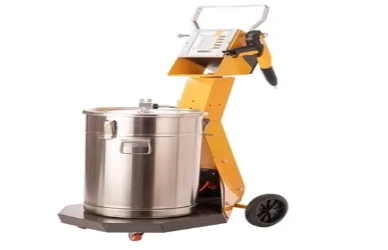
A powder coating machine is a specialized piece of equipment used in the powder coating process, which applies a dry powder to the surface of parts to create a durable, high-quality finish. Unlike traditional liquid painting, powder coating involves applying electrostatic-charged powder to a part, where it adheres to the surface. The powder is then cured in a heating oven, where the particles melt, bond with the surface, and form a hard, smooth coating. This process provides a strong, scratch-resistant, and aesthetically appealing finish that is resistant to chipping, fading, and corrosion. The key components of a powder coating machine include the spray gun, which applies the powder using an electrostatic charge, the powder booth, which captures excess powder and maintains a clean working environment, and the curing oven, where the applied powder is heated to form a durable coating. These machines play a vital role in industries such as automotive, architecture, and consumer goods, offering efficient, cost-effective, and environmentally friendly finishing solutions.
How Does a Powder Coating Machine Work?
1.Application Process
The powder coating process begins with the application of the powder to the part using an electrostatic spray gun. The spray gun charges the powder particles with static electricity as they pass through the nozzle. The part being coated is grounded, and the electrostatic charge attracts the powder particles, causing them to adhere evenly to the surface. This method ensures a smooth, consistent application of the powder, which provides an even coating across the part. The electrostatic attraction helps minimize overspray, making the application process more efficient and reducing material waste.
2.Curing Process
Once the powder is applied, the part is transferred to a curing oven, where it is heated to temperatures typically between 160-200°C (320-400°F). During this process, the powder melts and chemically bonds to the surface of the part, forming a hard, durable coating. The heat causes the powder particles to flow, fuse together, and crosslink, creating a strong, smooth, and scratch-resistant finish. The curing process is essential for ensuring that the coating provides long-lasting protection and durability.
3.Efficiency
Powder coating machines are designed to ensure high efficiency and minimal waste. The electrostatic application of the powder allows for precise control over the amount of powder used, reducing overspray. Excess powder that is not applied to the part is captured by the powder booth and can be recycled for future use, making the process highly cost-effective and environmentally friendly. The even application and curing process result in a uniform, durable finish that reduces the need for additional touch-ups or rework, improving overall production efficiency.

Components of a Powder Coating Machine
1.Spray Gun
The electrostatic spray gun is a critical component of a powder coating machine. It is responsible for applying the charged powder to the surface of the part. The gun works by imparting an electrostatic charge to the powder particles as they are sprayed. The part being coated is grounded, which creates an attraction between the charged powder and the part, ensuring even and consistent coverage. The spray gun allows for precise control of the powder flow, ensuring the desired thickness and finish while minimizing overspray and waste.
2.Powder Booth
The powder booth is designed to capture and recycle excess powder that is not applied to the part during the coating process. The booth creates a contained environment where the powder is sprayed, and its built-in filtration system helps to prevent excess powder from becoming airborne. This system ensures a clean workspace, while also allowing for the collected powder to be reused, reducing waste and material costs. The powder booth plays a crucial role in improving the efficiency and environmental sustainability of the powder coating process.
3.Curing Oven
The curing oven is essential in the powder coating process, as it is responsible for hardening the applied powder. Once the powder is sprayed onto the part, it is transferred to the curing oven, where it is heated to temperatures typically between 160-200°C (320-400°F). The heat causes the powder to melt and chemically bond with the surface of the part, forming a durable, smooth finish. The curing oven ensures that the coating has the strength, adherence, and resistance required to withstand wear, UV exposure, and environmental elements, making it a critical part of the powder coating system.
Advantages of Using a Powder Coating Machine
1.Durability
One of the primary advantages of using a powder coating machine is the superior durability of the powder-coated finish. Unlike traditional liquid paints, powder coatings form a harder, more resistant layer on the part's surface, making them highly resistant to chipping, scratches, and fading. The curing process in the oven chemically bonds the powder to the surface, creating a tough and uniform coating that can withstand harsh environments, abrasion, and UV exposure, which makes it ideal for both indoor and outdoor applications.
2.Environmentally Friendly
Powder coating is much more environmentally friendly compared to conventional liquid paints. It produces low or zero volatile organic compounds (VOCs), which are harmful chemicals typically released into the air during liquid painting. This makes powder coating a cleaner, safer option for both workers and the environment. Additionally, powder coating generates minimal waste—excess powder that doesn’t adhere to the part can be collected and reused, reducing material waste and ensuring that resources are used efficiently.
3.Cost Efficiency
Using a powder coating machine can significantly improve cost efficiency in the manufacturing process. The electrostatic application of the powder ensures minimal overspray, and any unused powder is captured and can be recycled, reducing material costs. The durability of the powder-coated finish also means that fewer touch-ups and repairs are required, saving on long-term maintenance costs. Additionally, powder coating machines increase production efficiency by automating the application and curing processes, reducing labor time and enhancing throughput, leading to higher overall productivity and lower operational costs.
Frequently Asked Questions (FAQ)
1. How long does the powder coating process take?
The powder coating process involves several stages: applying the powder, curing it in a curing oven, and then performing a final inspection of the coated part. Typically, the curing process takes between 10 to 20 minutes, depending on the part size, powder type, and oven temperature. Larger or thicker parts may require a longer curing time, while smaller parts might cure more quickly. The overall time may also vary depending on the specific environmental conditions and the desired finish quality.
2. Can powder coating be applied to all materials?
While powder coating is most commonly applied to metal surfaces, such as steel, aluminum, and iron, it can also be used on certain other materials with the proper preparation. For example, some plastics can be coated using specially formulated powders and with specific pre-treatment processes. However, not all materials are suitable for powder coating, and the surface must be appropriately prepared to ensure proper adhesion and a smooth finish.
3. What are the main types of powder used in powder coating?
The most common types of powder used in powder coating are epoxy, polyester, and hybrids. Epoxy powders are known for excellent adhesion and corrosion resistance, making them ideal for indoor applications. Polyester powders are more resistant to UV rays, making them suitable for outdoor use, where weathering and UV degradation are concerns. Hybrid powders combine the best qualities of both epoxy and polyester, offering a good balance of durability, corrosion resistance, and UV protection, and are commonly used for general-purpose applications.
4. Can powder coating be used for both indoor and outdoor applications?
Yes, powder coating can be used for both indoor and outdoor applications, but the type of powder used depends on the environment the coated part will be exposed to. Polyester-based powders are especially suited for outdoor applications, as they offer superior UV resistance and can withstand harsh weather conditions. On the other hand, epoxy powders are more commonly used for indoor applications due to their excellent adhesion, corrosion resistance, and ability to withstand regular wear. Choosing the right type of powder is essential to ensure the longevity and performance of the coating.
Conclusion
In conclusion, powder coating machines provide an advanced, efficient solution for applying high-quality, durable finishes to a wide range of materials. The powder coating process, which includes the precise application of electrostatically charged powder, followed by curing in a heated oven, ensures that parts achieve a smooth, hard, and long-lasting finish. Key components like the spray gun, powder booth, and curing oven work together seamlessly to deliver consistent and uniform coatings. Powder coating offers numerous advantages over traditional liquid painting methods, including superior durability, with coatings that are more resistant to scratches, chipping, and fading. Additionally, it is an environmentally friendly process, producing minimal waste and emissions, and reducing the environmental impact compared to conventional paint. The process is also cost-efficient, saving on both material costs and labor while increasing production efficiency. Whether applied to automotive, architectural, or consumer goods applications, powder coating machines help achieve a professional finish that enhances the aesthetic and functional qualities of the parts. As industries continue to prioritize sustainability and quality, powder coating remains an essential technique for creating high-performance, long-lasting finishes.