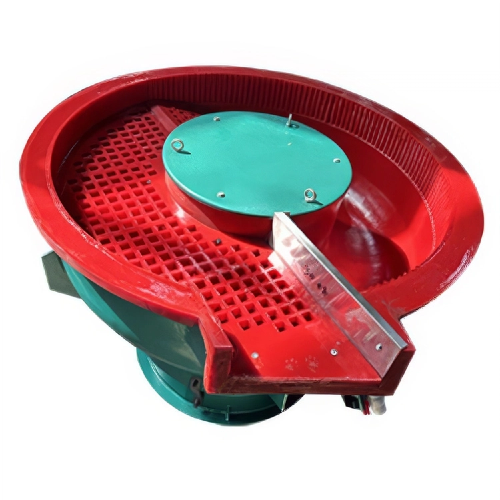
Vibratory polishing machines are an essential part of modern manufacturing, offering efficient, consistent, and cost-effective polishing solutions across various industries. These machines use vibrational motion to polish, deburr, and finish the surfaces of workpieces. They play a crucial role in improving the quality, durability, and appearance of parts used in automotive, aerospace, metalworking, jewelry, and many other sectors.
The effectiveness of a vibratory polishing machine depends significantly on selecting the right type for specific needs. This article will explore the different types of vibratory polishing machines available today, their features, applications, and the factors to consider when choosing the right one for your production requirements.
How Vibratory Polishing Machines Work
Vibratory polishing machines work on a simple yet highly effective principle: vibration. The machine uses a vibrating bowl or tub to create oscillatory motion, which causes polishing media and workpieces to interact. The polishing media, often made of ceramic, plastic, or metal, move in a controlled pattern, gradually wearing down rough edges, smoothing surfaces, and polishing the material to the desired finish.
Key Components of Vibratory Polishing Machines
Bowl/Tub: Holds the workpieces and media and vibrates to create the necessary motion.
Vibration Mechanism: The mechanical or electromagnetic system that generates the vibration. It can be either a centrifugal, linear, or rotary mechanism.
Polishing Media: Abrasive material that helps in polishing. These can be ceramic, plastic, steel, or rubber-based depending on the material being polished.
Workpieces: The items being polished. These can range from small parts to large industrial components, depending on the machine’s capacity.
Types of Vibratory Motion in Polishing
Circular Motion: The most common motion used in vibratory polishing machines, ideal for general polishing and finishing tasks.
Linear Motion: This motion is used in larger machines where the workpieces require more precise or uniform interaction with the media.
Elliptical Motion: A combination of linear and circular motions, providing more flexibility and efficiency, suitable for mass production.
Types of Vibratory Polishing Machines
The type of vibratory polishing machine you choose depends on your specific needs, including the material to be polished, the size of the workpieces, and the desired finish. Below are the different types of vibratory polishing machines, their features, applications, and ideal use cases.
1. Bowl-type Vibratory Polishing Machines
Description
Bowl-type vibratory polishing machines feature a circular, bowl-shaped container where both the workpieces and polishing media are placed. The bowl vibrates, causing the media to tumble around the workpieces, smoothing and polishing them. These machines are widely used for small to medium-sized parts.
Applications
Metalworking: Polishing small metal parts such as nuts, bolts, and washers.
Jewelry Polishing: Used for polishing delicate jewelry pieces made of metals like gold, silver, and brass.
Automotive Components: Polishing small automotive parts such as gears, springs, and brackets.
Features
Cost-effective: Ideal for small to medium-sized parts, offering efficient polishing at a low cost.
Space-efficient: Takes up less space than larger machines, making it suitable for smaller workshops and production lines.
Versatile: Can be used for a variety of materials including metals, plastics, and ceramics.
2. Tub-type Vibratory Polishing Machines
Description
Tub-type vibratory polishing machines feature a rectangular tub, which can hold larger workpieces compared to bowl-type machines. These machines are typically used for more complex parts or larger batches of components. They are known for their ability to process larger volumes continuously.
Applications
Industrial Parts: Ideal for polishing large, complex, or heavy-duty parts used in industries like automotive and aerospace.
Manufacturing: Suitable for high-volume polishing of parts such as machine tools, large fasteners, and structural components.
Features
Larger Capacity: Suitable for larger or heavier parts that require more space for proper processing.
Higher Throughput: Excellent for industries requiring mass polishing and continuous processing of parts.
More Robust: Can handle higher workloads and heavy-duty polishing tasks.
3. Continuous Vibratory Polishing Systems
Description
Continuous vibratory polishing systems are designed for high-volume production lines. These machines can continuously feed workpieces into the polishing system and remove finished parts at the other end, making them ideal for industries with a constant flow of parts that need to be polished.
Applications
Automotive Manufacturing: Used in large-scale production lines for polishing metal parts such as engine components, brackets, and exhaust systems.
Electronics: Suitable for polishing electronic components in mass production, such as connectors, metal casings, and circuit boards.
Features
Automation: Automated feeding and output systems help streamline production, minimizing downtime and manual intervention.
High Efficiency: Designed for continuous operation, maximizing throughput in industries with large quantities of parts to polish.
Consistent Results: Provides uniform polishing results over long production runs.
4. High-Energy Vibratory Polishing Machines
Description
High-energy vibratory polishing machines operate at higher frequencies and vibrations compared to standard models. This increased energy level allows for faster processing and is ideal for polishing hard materials or parts that require aggressive deburring and polishing.
Applications
Heavy-Duty Industrial Applications: Perfect for polishing tough materials such as hardened metals and alloys.
Aerospace: Polishing parts used in aerospace manufacturing, which require both fine finishes and fast turnaround times.
Features
Faster Processing: High-energy systems significantly reduce processing time while achieving superior polishing results.
Suitable for Tough Materials: Ideal for hard metals and industrial applications that need intensive polishing action.
5. Ultrasonic Vibratory Polishing Machines
Description
Ultrasonic vibratory polishing machines combine traditional vibratory polishing with ultrasonic waves to provide enhanced polishing action. These machines use high-frequency sound waves to create microscopic vibrations that refine the surface of delicate or small parts.
Applications
Precision Parts: Polishing small, delicate, or intricate parts such as those used in electronics, optics, or medical devices.
Jewelry and Watches: Often used in the jewelry and watch industries for polishing fine details without damaging delicate components.
Features
Fine Finishes: Ultrasonic machines provide a high level of precision, ideal for parts that require a fine, glossy finish.
Minimal Surface Damage: The ultrasonic vibrations help prevent surface damage while achieving a superior finish.
![Vibratory polishing machine]()
Factors to Consider When Choosing a Vibratory Polishing Machine
Selecting the right vibratory polishing machine depends on several factors that influence the overall efficiency and effectiveness of the polishing process. Below are key factors to consider:
Factor | Bowl-type Machines | Tub-type Machines | Continuous Systems | High-Energy Systems | Ultrasonic Machines |
Material Type | Metal, plastics, ceramics | Metals, alloys, larger components | High-volume metal parts | Hard metals, alloys | Small precision parts |
Workpiece Size | Small to medium-sized | Large or complex parts | High-volume, small parts | Small to large, hard materials | Small, delicate parts |
Finish Type | General to fine finishes | Fine to coarse finishes | Uniform finishes | Aggressive finishes | Precision, glossy finishes |
Production Volume | Low to medium | Medium to high | High, continuous flow | Medium to high | Low to medium |
Efficiency | Moderate | High | Very high | High | Moderate |
Choosing the Right Machine Based on Application
For High-Volume Production: Choose continuous vibratory polishing systems for maximum throughput.
For Delicate or Precision Parts: Ultrasonic vibratory polishing machines provide the most precise finish.
For Heavy-Duty Applications: High-energy vibratory polishing machines are perfect for polishing tough materials.
Maintenance and Care for Vibratory Polishing Machines
Proper maintenance is crucial to ensuring that your vibratory polishing machine remains in top working condition. Here are some key maintenance practices:
Routine Cleaning: Regularly clean the bowl or tub to remove residues and prevent contamination of the polishing media.
Media Inspection: Check the polishing media for wear and tear. Replace or clean media regularly to ensure consistent results.
Vibration System Check: Inspect the vibration system periodically to ensure that the machine is operating at optimal performance.
Workpiece Inspection: Regularly inspect workpieces to ensure they are free from defects or damage caused by improper polishing.
Conclusion
Choosing the right vibratory polishing machine is essential for achieving the best results, whether you're working with small, delicate parts or large industrial components. Bowl-type machines are perfect for small parts, while tub-type machines are better suited for larger, more complex components. Continuous systems are designed for high-volume production, providing seamless processing, while high-energy and ultrasonic machines offer specialized solutions for applications requiring fine finishes or faster processing.
At Huzhou Antron Machinery Co., Ltd., we understand that selecting the right machine for your needs can be a challenge. Our team is here to guide you through the process and recommend the most suitable vibratory polishing machine based on your specific requirements. Whether you need a solution for high-precision polishing, mass production, or tough material polishing, we offer tailored equipment to meet your needs.
Feel free to reach out to us for more information, and let us help you optimize your polishing process for maximum efficiency and quality. Our expert team is ready to assist you in selecting the perfect solution for your business.
FAQs
1. What is the difference between bowl-type and tub-type vibratory polishing machines?
Bowl-type machines are smaller and more cost-effective, suitable for small parts, while tub-type machines can handle larger parts and more complex polishing tasks.
2. How do continuous vibratory polishing systems work?
Continuous systems are designed for high-volume applications, allowing workpieces to be fed into the machine continuously, polished, and then outputted without manual intervention.
3. Can vibratory polishing machines be used for polishing delicate parts?
Yes, ultrasonic vibratory polishing machines are specifically designed for delicate and precise polishing, offering fine finishes without damaging the workpieces.
4. How do I choose the right vibratory polishing machine for my needs?
Consider factors such as workpiece size, desired finish, production volume, and material type to select the best machine for your application.
5. How often should a vibratory polishing machine be maintained?
Regular maintenance is necessary to keep the machine running smoothly. This includes cleaning, checking for wear, and replacing parts like polishing media and vibration systems.