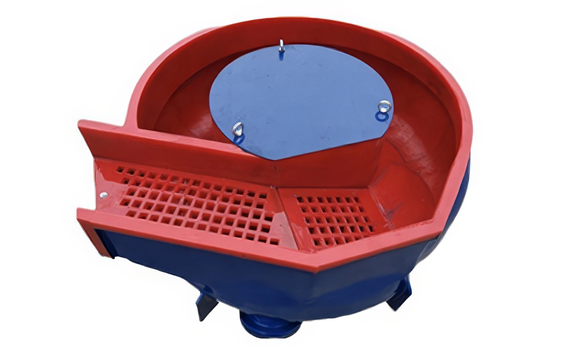
Manufacturing components for aerospace applications is a precision-driven, high-stakes endeavor. Every part—from turbine blades to fasteners—must meet rigorous standards for safety, performance, and reliability. A critical step in achieving these standards is surface preparation, which ensures parts are free from defects that could compromise functionality. Vibratory finishing machines have emerged as indispensable tools in this realm, offering a cost-effective, precise, and automatable method for deburring, polishing, and cleaning components.
Why Aerospace Demands Precise Surface Preparation
1. Safety and Structural Integrity
Aerospace components operate under extreme stress, vibration, temperature fluctuations, and pressure differentials. Even a tiny burr or micro-crack can become a site for fatigue failure. By ensuring that all machined edges are free from imperfections, vibratory finishing helps reduce stress concentrations and enhances overall part integrity.
2. Aerodynamics and Efficiency
Surfaces with roughness or irregularities can cause turbulence when exposed to airflow at high velocities, increasing drag and fuel consumption. Particularly for turbine blades and control surfaces, achieving mirror-like finishes is vital for optimizing aerodynamic performance.
3. Assembly Precision
Sharp edges and burrs complicate assembly and may lead to misalignment. Precision in assembly demands components that fit together cleanly and consistently—something vibratory finishing enables at scale.
4. Corrosion Resistance and Surface Cleanliness
Surface contaminants like oils and machining debris can inhibit coating adhesion or accelerate corrosion. By mechanically cleaning even internal passageways, vibratory finishing ensures parts are ready for anodizing, painting, or thermal spray coatings.
Parts Commonly Finished with Vibratory Machines
Vibratory finishing is used across several aerospace component categories—here’s how it fits into the manufacturing landscape:
Turbine Blades, Vanes & Impellers
These parts often start as cast or 3D-printed items with surface imperfections. Post-machining, they may carry micro-burrs that need smoothing. Vibratory finishing handles them gently, producing polished edges and surfaces without altering geometry.
Structural Brackets and Fittings
Made from aluminum, titanium, or stainless steel, these components require deburring, edge rounding, and surface smoothing. Vibratory finishing reduces machining variance, improves fatigue performance, and delivers consistency across batches.
Landing Gear Pins, Bushings, and Struts
Components in moving assemblies demand extremely precise tolerances (≤ ±0.01 mm) and smooth surfaces (Ra ≤ 0.6 µm). Vibratory finishing offers controlled finishes without overcutting or dimensional drift.
Fasteners, Nuts, Washers
Aircraft require thousands of these parts, all needing uniform chamfers and burr-free edges. Vibratory finishing enables efficient batch processing, ensuring consistency and reducing inspection failures.
Valves, Fuel Fittings, and Hydraulic Parts
These parts have tight internal geometries and fluid pathways. Vibratory finishing cleans both internal and external surfaces, improving sealing surfaces and fluid integrity.
Additive-Manufactured (3D-Printed) Metal Parts
Vibratory finishing is ideal for removing support structures, smoothing rough layers, and preparing parts for secondary machining or coatings. The process is fast, automated, and capable of handling complex geometries.
Aerospace Requirements for Surface Performance
Tight Dimensional Tolerances
Aerospace parts may demand deviations as low as 0.1–0.2 mm in critical dimensions. With precise cycle control and media selection, vibratory finishing removes as little as 5–20 μm—enough for finishing without compromising form.
Fatigue Resistance
Reducing micro-burrs and sharp edges significantly improves fatigue life. Studies show these finishing processes can increase fatigue life by up to 50%, depending on part geometry.
Surface Finish Standards
General surface specs include:
Structural components: Ra ≤ 0.8 µm
Hydraulic/fuel parts: Ra ≤ 0.25 µm
Exterior parts: mirror shine
Vibratory finishing—with proper media and compounds—meets these targets consistently.
Cleanliness and Certification
Aerospace manufacturing demands compliance with AMS 2644, AS9100, NADCAP, and other protocols. Automated vibratory solutions offer traceability via programmable cycles, media tracking, and quality data logs.

Key Applications of Vibratory Finishing Machines in Aerospace
1. Deburring and Edge Rounding
Targets: burr removal and radius uniformity
Process: coarse ceramic media first, followed by fine media
Benefits: uniform edge rounding, reduced stress risers, consistent fatigue performance
2. Surface Polishing and Cosmetic Finish
Targets: polished blades, cabin hardware
Process: multistage cycles ending with plastic media and polishing compounds
Benefits: aesthetic appearance and reduced drag
3. Pre-Coating Surface Preparation
Targets: blast prep, rinse, scale removal
Process: wet vibratory with compounds, rinse cycles
Benefits: improved coating adhesion and coverage
4. Alloy-Specific Finishing
Targets: aluminum, titanium, steel
Process: softer media for aluminum; ceramic/steel media with inhibitors for steel/titanium
Benefits: alloy-appropriate finishes with minimal material impact
5. Surface Texturing and Bonding Prep
Targets: controlled roughness for adhesives or mechanical bonding
Process: coarse media, predefined cycles
Benefits: strong adhesive joints and mechanical fastenings
6. Additive Manufacturing Refinement
Targets: layer line removal, support cleanup
Process: consistent vibratory deburring
Benefits: quick, scalable finishing for complex printed parts
Vibratory Finishing’s Role in Aerospace Manufacturing
Efficiency and Throughput
Industrial vibratory bowls run continuously, processing hundreds of parts per shift. This dramatically reduces labor and ramp-up time compared to manual finishing.
Process Standardization
Preset cycle controls on modern systems allow guaranteed repeatability. Each mode—deburr, polish, clean—runs identically across shifts.
Safety and Sustainability
Closed vessels reduce dust and noise; compounds are water-based; media can be recycled—ideal for environmentally conscious manufacturers.
Industry 4.0 Integration
IoT features allow remote monitoring, data logging, and maintenance planning. Smart sensors detect media load, heat, vibration, flow, and usage.
Cost Control
Though initial investment is high, reduced labor costs, lower scrap rates, and high throughput create fast ROI—usually within 12–18 months.
How Antron Vibratory Machines Meet Aerospace Needs
Programmable Control Systems
Preloaded cycle profiles tailored to aerospace parts
XML data logging for audit compliance
User-friendly HMI for cycle selection
Media Separation and Automation
Automatic separatory unloaders save manual post-processing
Conveyor interfaces integrate with production lines
Batch tracking with RFID for traceability
Sensor Integration
In-tank sensors monitor vibration amplitude and equip life
Temperature, torque, and compound level monitoring
Alerts and PLC connectivity for smart workflows
Adaptive Safety and Enclosures
Sealed tanks for dust and containment
Integrated water recirculation, filtration, and noise dampening
Designed to meet aerospace facility standards
Materials-Focused Media Kits
Ceramic packs for titanium/steel
Plastic/ceramic blends for aluminum
Magnetic media for intricate features
Sample Implementation: Industrial Case Study
Client: Medium-tier aerospace supplier
Challenge: Consistent finishing of 150 titanium brackets per cycle
System: Antron 400 L bowl with ceramic media and automatic separator
Results:
35% reduced cycle time
40% reduction in burr-related rework
Automatic traceability enabled AS9100 compliance
24/7 operation with remote monitoring
Conclusion
Vibratory finishing is a cornerstone of modern aerospace manufacturing—enabling precision edge rounding, surface polishing, contaminant removal, and geometric refinement across a wide range of parts. Its automation, repeatability, and integration capabilities make it an ideal solution for the demands of aerospace production.
By partnering with manufacturers like Huzhou Antron Machinery Co., Ltd., aerospace suppliers gain access to cutting-edge vibratory finishing technologies—programmable, IoT-ready, media-optimized systems that enhance productivity, ensure quality, and meet stringent certification standards.
Ready to enhance your process line with aerospace-grade vibratory finishing? Visit www.antronmachinery.com or contact Antron’s aerospace team for consultations, demos, or customized finishing solutions.