The medical implant industry is one of the most demanding sectors in manufacturing due to the critical nature of its products. Medical implants such as hip replacements, dental implants, spinal devices, and cardiovascular stents require extremely precise manufacturing and finishing processes to ensure biocompatibility, durability, and safety for patients.
One essential step in the manufacturing workflow is surface finishing. The surface quality of an implant directly impacts its functionality, osseointegration (bone bonding), and resistance to wear and corrosion. Vibratory finishing machines have emerged as a game-changing technology in this field, offering efficient, consistent, and high-quality surface finishing solutions tailored to the intricate and demanding requirements of medical implants.
Why Surface Finishing Matters in Medical Implants
Medical implants undergo extreme conditions inside the human body, including exposure to bodily fluids, mechanical stress, and interaction with biological tissues. Surface finishing plays a crucial role in:
Enhancing Biocompatibility: Smooth, polished surfaces reduce the risk of tissue irritation and inflammation.
Improving Mechanical Performance: Proper finishing reduces micro-cracks and stress risers that could lead to implant failure.
Preventing Corrosion and Wear: Surface treatments improve resistance against corrosion and wear caused by body fluids and mechanical motion.
Optimizing Osseointegration: Certain surface textures encourage bone cells to adhere and grow on the implant, enhancing long-term stability.
Given these factors, finishing processes must achieve exacting standards in terms of surface roughness, uniformity, and cleanliness.
Challenges in Finishing Medical Implants
Medical implants present unique finishing challenges:
Complex Geometries: Implants often have intricate shapes, internal channels, and delicate features that are difficult to access.
Small Sizes: Many implants are small, requiring precise, controlled finishing without distortion or damage.
Strict Regulatory Standards: Finishing must comply with medical device regulations for safety and cleanliness.
Material Variety: Implants can be made from titanium, stainless steel, cobalt-chromium alloys, ceramics, and polymers—each requiring different finishing approaches.
Traditional finishing methods like manual polishing or abrasive blasting are labor-intensive, inconsistent, and sometimes unsuitable for delicate implant geometries.
How Vibratory Finishing Machines Address These Challenges
Vibratory finishing machines have revolutionized medical implant finishing through their ability to provide uniform, controlled, and scalable surface treatment.
1. Gentle Yet Effective Finishing
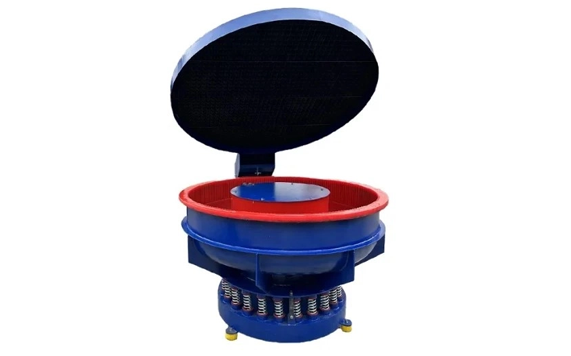
Vibratory finishing uses controlled vibration to move a combination of abrasive media and implants inside a bowl or tub. This action gently removes burrs, smooths surfaces, and polishes the implants without harsh mechanical contact that could deform or damage delicate features.
2. Access to Complex Geometries
The tumbling action allows media to reach all exposed surfaces—including internal channels and recesses—ensuring uniform finishing of intricate implant designs.
3. Customization with Various Media
Different types of media—ceramic, plastic, or organic—can be selected and combined to achieve the desired finish, from deburring and matte surfaces to mirror-like polish.
4. Scalability and Consistency
Vibratory finishing machines enable batch processing of implants, delivering repeatable results with less manual labor and reducing human error.

Applications of Vibratory Finishing Machines in Medical Implant Manufacturing
Medical implant manufacturing demands exceptional precision and surface quality to ensure implants are safe, durable, and biocompatible. Vibratory finishing machines have become a critical part of this process, offering efficient and consistent finishing solutions for a variety of implant types. Below, we explore the primary applications and key advantages of using vibratory finishing machines in the medical implant industry.
Deburring and Edge Rounding
After implants undergo machining or additive manufacturing, they often have sharp edges or burrs. These imperfections can pose serious risks, such as causing tissue damage or creating stress concentrations that may lead to premature implant failure. Vibratory finishing machines excel in removing these sharp edges through a controlled tumbling process. This method ensures burrs are uniformly eliminated while simultaneously rounding edges to improve implant safety and longevity. The process is gentle enough to protect intricate geometries, which is vital given the complex shapes often involved in medical implants.
Surface Polishing
Implants such as dental crowns, orthopedic joints, and spinal devices require surfaces with exceptional smoothness and polish. A finely polished surface reduces friction, minimizes wear, and enhances biocompatibility by limiting bacterial adhesion. Vibratory polishing uses specialized media and consistent vibration to achieve a high luster finish without compromising the dimensional accuracy of the part. This uniform polishing process improves patient comfort and implant performance.
Surface Preparation for Coatings
Many medical implants undergo coating processes to enhance their functionality. For instance, hydroxyapatite coatings encourage bone growth and integration, while other surface treatments improve corrosion resistance or wear characteristics. Vibratory finishing plays an essential role in preparing these surfaces by thoroughly cleaning and texturing the implant’s exterior. This preparation step is crucial because it ensures optimal adhesion and longevity of coatings, which directly affects the implant's success in the human body.
Cleaning and Contaminant Removal
Vibratory finishing machines are also highly effective in cleaning implants. After machining or additive manufacturing, residues like oils, metal powders, and other contaminants can remain on the surface. These must be removed to meet stringent medical cleanliness standards and prevent adverse biological reactions. The tumbling action, combined with appropriate cleaning media and compounds, ensures that implants are free from contaminants, making them ready for sterilization and implantation.
Key Advantages of Using Vibratory Finishing Machines in the Medical Field
Improved Efficiency
Automated vibratory finishing systems significantly reduce cycle times compared to manual polishing. They allow for simultaneous processing of multiple parts, increasing throughput and enabling manufacturers to meet the growing production demands of the medical industry. This efficiency makes vibratory finishing an indispensable tool in modern implant manufacturing workflows.
Enhanced Quality Control
Vibratory finishing machines offer precise control over vibration settings, media types, and processing durations. This control results in consistent and repeatable finishing quality across batches, reducing variability and ensuring that every implant meets strict regulatory and quality standards. Enhanced quality control directly contributes to patient safety and device reliability.
Cost-Effectiveness
By minimizing the need for labor-intensive manual finishing and reducing scrap or rework caused by inconsistent polishing, vibratory finishing machines help lower overall manufacturing costs. Their durability and reliability also mean less downtime and maintenance, further improving cost efficiency.
Reduced Risk of Part Damage
Unlike harsher finishing methods, vibratory finishing provides a gentle tumbling action that minimizes the risk of part deformation or damage. This attribute is particularly important for delicate implants with fine details or thin sections. Protecting these parts during finishing extends their usable lifespan and maintains performance integrity.
Antron Machinery’s Role in Medical Implant Vibratory Finishing
Huzhou Antron Machinery Co., Ltd. specializes in vibratory finishing solutions tailored for precision industries including medical device manufacturing. Their product line includes:
Desktop Vibratory Tumblers: Compact units ideal for prototype and small-batch finishing with precise control.
Automatic Vibratory Machines: Large-scale solutions with programmable controls, separators, and media management systems.
Specialized Media: High-quality abrasive media optimized for different implant materials and finishing stages.
Antron’s machines ensure that medical implants are finished to the highest standards, enabling manufacturers to comply with regulatory requirements while maintaining production efficiency.
Conclusion: Vibratory Finishing Machines Are Transforming Medical Implant Manufacturing
The medical implant industry demands impeccable surface quality for safety, performance, and patient well-being. Vibratory finishing machines provide an unmatched combination of precision, scalability, and versatility that meets these needs. From deburring and polishing to cleaning and surface preparation, vibratory finishing is essential in turning raw implants into reliable, high-performance medical devices.
Manufacturers looking to enhance their finishing processes and product quality should explore advanced vibratory finishing solutions like those offered by Huzhou Antron Machinery Co., Ltd. Their expert-engineered machines deliver consistent, efficient, and compliant finishing tailored for the medical implant sector.