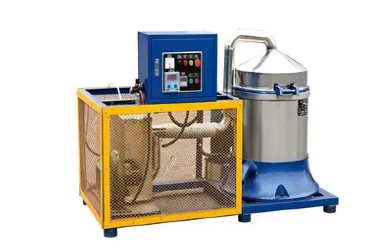
A mass finishing machine is a specialized piece of equipment used in manufacturing processes to improve the surface quality of parts or products through batch processing. Unlike traditional manual finishing methods, mass finishing machines are designed to handle large volumes of parts at once, providing consistent, high-quality results in a fraction of the time. These machines use abrasive media and various finishing techniques, such as deburring, polishing, cleaning, and surface smoothing, to treat the surfaces of components. The primary purpose of mass finishing is to remove sharp edges (burrs), smooth rough surfaces, and prepare parts for further processing or assembly. These machines are widely used across industries such as automotive, aerospace, electronics, jewelry, and medical device manufacturing, where high precision and uniformity are essential. By automating the finishing process, mass finishing machines not only increase efficiency but also ensure consistent, repeatable quality, making them indispensable in modern manufacturing.
Types of Mass Finishing Machines
Mass finishing machines are essential for improving the surface quality of parts in manufacturing. Below are the key types of mass finishing machines, each suited to specific applications.
1. Vibratory Finishing Machines
Vibratory finishing machines are the most common and versatile type. They use vibration to move abrasive media and parts within a large bowl, creating friction to deburr, smooth, and polish the parts.
Working Principle: The machine vibrates, causing parts and media to move in a tumbling motion, which helps achieve surface finishes like deburring and polishing.
Applications: Used for deburring, polishing, and cleaning small to medium-sized parts, especially in industries like automotive, electronics, and metalworking.
2. Centrifugal Finishing Machines
Centrifugal finishing machines use high-speed rotation for more aggressive polishing and deburring. The increased centrifugal force helps achieve faster and more intense results.
Working Principle: Parts and media are placed in a rotating drum, and the high-speed rotation generates centrifugal force that intensifies the finishing process.
Applications: Ideal for deburring, polishing, and cleaning parts with complex geometries, often used in industries like aerospace and precision engineering.
3. Rotary Barrel Tumblers
Rotary barrel tumblers are suitable for finishing larger or heavier parts. The rotating barrel tumbles the parts and media for continuous finishing action.
Working Principle: The rotating barrel moves the parts over the media, achieving the finishing effect through tumbling.
Applications: Best for larger parts or bulk processing, such as deburring, polishing, and cleaning large components like castings and engine parts.
4. Other Specialized Finishing Machines
High-energy finishing machines: Used for quick, ultra-fine finishes, ideal for precise applications.
Tumbling barrels: Specialized machines with multiple rotating chambers for polishing delicate parts.
Drag finishing machines: Used for high-precision polishing of delicate or small parts, such as in medical device and jewelry manufacturing.
Applications of Mass Finishing Machines
Mass finishing machines are essential tools in modern manufacturing, used for a variety of applications that improve the quality and functionality of parts. Below are some of the primary applications of these machines:
1. Deburring
One of the most common uses of mass finishing machines is deburring, the process of removing sharp edges or burrs left on metal or plastic parts after manufacturing. Burrs can cause issues such as part failure, safety hazards, or difficulty in assembly. Mass finishing machines, especially vibratory and centrifugal machines, use abrasive media to effectively remove burrs from intricate and complex parts without damaging them.
Applications: Used in industries such as automotive, electronics, and aerospace, mass finishing machines are essential for cleaning up edges on parts like gears, fasteners, and metal castings, ensuring they are safe for further use or assembly.
2. Polishing and Surface Smoothing
Mass finishing machines are also used to polish and smooth surfaces of parts, improving their appearance and functionality. By using abrasive media and controlled motion, these machines can achieve smooth, uniform finishes on materials like metal, plastic, and ceramics.
Applications: Polishing machines help enhance the visual appeal of parts like jewelry, medical devices, and precision tools. Additionally, surface smoothing is crucial for improving the performance of parts that require precise fit and function, such as engine components or electronic housings.
3. Cleaning and Degreasing
Another important application of mass finishing machines is cleaning and degreasing industrial parts. During the manufacturing process, parts can accumulate oil, grease, or other contaminants that can affect their performance, appearance, or assembly. Mass finishing machines are used to clean these parts effectively without causing damage.
Applications: Mass finishing machines equipped with the right media and compounds help remove contaminants from parts used in the automotive, electronics, and medical industries, ensuring the parts are clean and ready for further processing or use.
4. Abrasive Finishing
Mass finishing machines are commonly used for abrasive finishing, a process that prepares the surface of parts for further treatments or specific surface qualities. This can include creating matte or textured finishes on materials. By using different types of abrasive media and varying the intensity, mass finishing machines can achieve the desired surface profile.
Applications: Abrasive finishing is used in industries where surface texture is important, such as metalworking, jewelry, and architectural finishes. The process can provide a matte or satin finish on metal parts, create a decorative texture on jewelry, or provide an ideal surface for coating or bonding in aerospace and automotive components.

Choosing the Right Mass Finishing Machine
Selecting the right mass finishing machine is crucial for achieving high-quality surface finishes efficiently. Several factors, including part material, desired finish, and part size, should be considered to ensure optimal results. Here’s how to assess your needs to choose the best machine.
1. Material of the Parts
The material of the parts determines which type of finishing machine to use. Different materials, such as metals, plastics, and ceramics, require different approaches:
Metals: Harder metals like stainless steel or aluminum may need more aggressive methods, like ceramic media in centrifugal machines.
Plastics: Softer materials are best finished with plastic media in vibratory machines.
Ceramics: Specialized media and machines are used to achieve the best finish for ceramic parts.
2. Desired Finish
The type of finish you need—whether it’s deburring, polishing, or smoothing—determines the choice of machine:
Deburring: Vibratory or centrifugal machines are ideal for removing burrs from parts.
Polishing: For a smooth, shiny finish, use machines with finer media like plastic or ceramic.
Matte/Texture Finishing: Abrasive methods can be used for creating textured surfaces.
3. Part Size
Part size influences which machine is suitable:
Small Parts: Vibratory and centrifugal machines are best for small parts, offering high efficiency.
Larger Parts: For bigger components, rotary barrel tumblers are ideal.
4. Throughput and Volume
Consider the volume of parts you need to process:
5. Media and Compound Selection
The abrasive media and compounds used affect the finish:
Ceramic, plastic, or steel media is selected based on material hardness and the required finish.
Polishing or cleaning compounds can be used to enhance results.
6. Customization and Flexibility
Some businesses may need specific machine features. Look for flexibility in speed settings, vibration control, and customizable features to suit different part shapes or sizes.
Frequently Asked Questions (FAQ)
1. What is the purpose of a mass finishing machine?
A mass finishing machine is used to improve the surface quality of parts through processes such as deburring, polishing, and cleaning. It efficiently finishes multiple parts at once, offering consistency and speed compared to manual methods.
2. What are the different types of mass finishing machines?
Common types of mass finishing machines include vibratory finishing machines, centrifugal finishing machines, and rotary barrel tumblers. Each type uses a different method, but all are designed to finish parts in bulk with consistent results.
3. What materials can be finished using mass finishing machines?
Mass finishing machines are suitable for a wide range of materials, including metals (such as steel, aluminum, and brass), plastics, and ceramics. These machines are versatile and can handle parts of various sizes and shapes.
4. How does mass finishing improve part quality?
Mass finishing helps improve the surface finish of parts by removing burrs, smoothing rough surfaces, and cleaning contaminants. It enhances the appearance and performance of parts, making them ready for further manufacturing or assembly.
Conclusion
Mass finishing machines are integral to modern manufacturing, playing a critical role in improving production processes across various industries. These machines are essential for achieving high-quality, uniform surface finishes on parts, ensuring consistency and precision even in large-scale production runs. By automating complex tasks such as deburring, polishing, and cleaning, mass finishing machines significantly reduce the reliance on manual labor, leading to a more efficient, streamlined workflow. This increased efficiency not only shortens production times but also reduces operational costs, allowing manufacturers to optimize their resources and improve their bottom line.
Beyond just enhancing the aesthetic and functional quality of components, mass finishing machines contribute to long-term durability by ensuring uniformity and eliminating imperfections that could affect product performance. Industries like automotive, aerospace, and electronics, where precision, speed, and cost-effectiveness are critical, greatly benefit from these machines. They provide a competitive advantage by improving product quality, meeting stringent industry standards, and enabling faster turnaround times. Ultimately, mass finishing machines are key enablers of innovation, efficiency, and quality control in modern manufacturing, supporting the growth and competitiveness of businesses in an increasingly demanding marketplace.