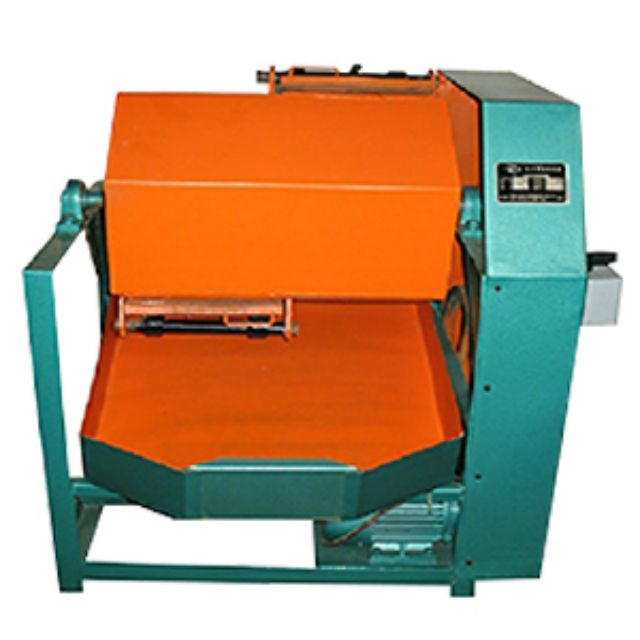
Manufacturers face a constant battle on the production floor. You demand flawless surface finishes on every component. Manual deburring relies heavily on unpredictable human labor. This hands-on approach destroys profit margins. It also creates dangerous bottlenecks during peak production hours. Investing in automated equipment solves these critical issues immediately. It standardizes your surface quality across every batch. It drastically reduces your direct labor costs. It allows you to scale daily throughput without ever compromising part integrity.
This guide explains the underlying mechanics of automated surface refinement. We explore the distinct physical forces driving the process. You will learn how to differentiate the primary equipment categories accurately. We also provide a practical framework for selecting the exact system suited for your manufacturing line. You will gain the knowledge needed to eliminate guesswork. We will show you how to implement a repeatable, highly controlled finishing strategy today.
Key Takeaways
The Process: Mass finishing utilizes a precise combination of kinetic energy, abrasive media, and chemical compounds to uniformly deburr, descale, or polish large batches of parts.
Equipment Variations: Selecting between vibratory, rotary barrel, or high-energy centrifugal machines depends strictly on part fragility, target cycle times, and budget.
Total Cost of Ownership: A successful implementation requires factoring in hidden costs, including media attrition, wastewater management, and machine relining intervals.
The Buying Reality: Never purchase a machine without first conducting a verified sample processing test with the vendor to lock in exact media formulations and cycle times.
What Is Mass Finishing? Defining the Core Process
We define mass finishing as a highly controlled mechanical surface modification process. Engineers use it to treat dozens or thousands of parts simultaneously. It fundamentally replaces hand-grinding, belt sanding, and manual polishing operations. This process creates uniformity across massive production runs. It eliminates the variations inherently caused by human operators.
Success in this process never happens by accident. It relies entirely on a carefully balanced recipe. We break this down into four critical variables. You must optimize each element to achieve repeatable results.
The Machine: This acts as your primary source of kinetic energy. The equipment dictates the specific motion and force applied to the batch.
The Media: These abrasive materials act as thousands of tiny cutting tools. You can choose ceramic for heavy deburring. You might select plastic for softer metals. Steel media works best for burnishing, while organic materials handle final polishing.
The Compound: This chemical agent mixes with water inside the chamber. It cleans the parts continuously. It suspends fine particulates to prevent part darkening. It also provides essential corrosion inhibition.
The Parts: These are your raw components. Their material density, geometry, and initial burr size dictate the rest of the recipe.
Your operational goal remains straightforward. You want to achieve a targeted surface roughness consistently. Engineers measure this using Ra (Average Roughness) or Rz (Mean Roughness Depth) values. A properly tuned process hits these exact specifications across thousands of parts. It ensures every component meets strict quality assurance standards before assembly.
Best Practices for Process Optimization
Always match the media density to your specific metal type.
Ensure your media geometry differs from your part's hole sizes.
Monitor your compound flow rates carefully during long cycles.
How Does a Mass Finishing Machine Work? The Physics of Surface Refinement
Kinetic energy transfer sits at the core of the operation. Every mass finishing machine utilizes a heavy-duty motor to create intense motion. This motion manifests as either high-frequency vibration or rapid rotation. The equipment transfers this energy directly into the processing chamber. This action forces the abrasive media to rub against your parts under constant, even pressure.
Friction drives the actual cutting action. The sheer weight of the media mass acts like a fluid grinding stone. It combines with the machine's relentless kinetic action. This powerful combination shears off microscopic burrs. It smooths sharp surface peaks into uniform, safe radii. The continuous friction slowly refines the surface layer until it meets your exact specifications.
Wet vs. Dry Processing Realities
You must choose between wet and dry environments based on your application. Each method offers distinct physical advantages.
Wet Processing: This covers roughly 90% of industrial applications. It uses liquid compounds to keep parts clean and cool. The water flushes away sheared metal fines. It significantly extends the lifespan of your abrasive media. It also cushions fragile parts from severe impact damage.
Dry Processing: We reserve this for highly specific niche uses. You typically use it for high-gloss polishing. It utilizes organic media like crushed walnut shells or corn cob granules. Engineers frequently deploy dry processing for luxury hardware or medical tools requiring mirror-like finishes.
Categorizing Mass Finishing Machines: Which Fits Your Production?
You must match your equipment to your specific application requirements. Using the wrong system destroys fragile components. It also causes unnecessary production delays. We categorize the equipment into three primary groups based on their mechanical action.
Vibratory Finishing Machines (Tubs & Bowls)
These machines represent the industry standard. They use specialized eccentric weights attached to a motor. This setup creates a unique corkscrew rolling action inside the polyurethane-lined chamber. The media and parts roll over each other in a continuous fluid motion.
They remain highly versatile. The open-top design allows for safe, in-process part inspection. You can pull a part out mid-cycle to check the edge radius. They prove ideal for easily tangled items or moderately fragile parts. You can configure them for simple batch processing or continuous flow automated lines.
Rotary Barrel Tumblers
This represents the oldest and most traditional method. It relies on a spinning hexagonal or octagonal barrel. As the barrel turns, it drags the mass upward until gravity forces it to cascade down. We call this the "landslide" action.
This process operates much slower than vibratory methods. However, it remains highly cost-effective. The closed-barrel design limits part inspection during cycles. You must stop the machine to check progress. It works best for aggressive edge rounding on heavy, highly durable parts.
Centrifugal Disc & High-Energy Machines
These systems utilize extreme rotational speed to generate massive centrifugal force. They multiply the standard weight of the media mass by up to 10 to 20 times gravity. This intense pressure creates highly aggressive cutting action.
They require a significantly higher upfront investment. However, they deliver cycle times up to ten times faster than standard vibratory machines. What takes three hours in a tub might take twenty minutes here. They are absolutely mandatory for high-value aerospace components, medical implants, or ultra-hard alloy polishing.
Equipment Comparison Matrix
Machine Category
Primary Mechanism
Processing Speed
Ideal Part Types
In-Process Inspection
Vibratory Bowls/Tubs
High-frequency corkscrew roll
Moderate (1-4 hours)
Versatile, easily tangled parts
Yes (Open top)
Rotary Barrel Tumblers
Gravity-driven landslide
Slow (4+ hours)
Durable, heavy castings
No (Closed barrel)
High-Energy Centrifugal
G-force multiplication
Extremely Fast (10-30 mins)
Aerospace, medical, hard alloys
No (Sealed chamber)
Key Evaluation Criteria: Specifying the Right Equipment
Choosing the correct system requires careful engineering analysis. You cannot rely on guesswork when dealing with high-volume production. We recommend evaluating three specific criteria before finalizing any equipment specification.
Part Geometry and Impingement Risk
You must evaluate part-on-part damage risks carefully. Impingement occurs when two metal parts strike each other during the cycle. This creates unacceptable dents or scratches. You prevent this by manipulating the media-to-part ratio. A standard ratio sits around three parts media to one part metal by volume. Highly fragile parts require a much higher ratio, sometimes reaching six to one.
If parts possess complex geometries or extreme fragility, you must isolate them. Engineers solve this by utilizing machines with internal dividers. These compartmentalized chambers keep individual parts separated while the media flows around them freely.
Throughput and Scalability
You need to match the equipment capacity to your daily shift volumes. Assess your maximum batch size limits carefully. A small job shop might only need a standalone vibratory bowl processing fifty parts per hour. A massive automotive supplier requires a completely different approach.
High-volume facilities typically require continuous-feed systems. Operators load raw parts at one end of a long vibratory tub. Finished parts exit the opposite end continuously. You must calculate your required throughput accurately to avoid creating secondary bottlenecks.
Material Handling Automation
Many buyers focus entirely on the finishing cycle. They completely ignore what happens after the machine stops. Unloading massive batches of wet, heavy parts by hand destroys labor efficiency. You must evaluate the necessity of integrated automation.
Modern systems utilize internal separation decks. These screens allow the media to drop back into the bowl while parts move forward. You might also need magnetic sorters for ferrous components. Automated media return systems prevent massive labor bottlenecks. They allow operators to focus on quality control rather than shoveling heavy abrasives.
The Shortlisting Framework: How to Choose a Mass Finishing Partner
Purchasing industrial finishing equipment carries significant risk. You are not buying an off-the-shelf appliance. You are investing in a complex chemical and mechanical process. You must hold your equipment vendors to strict validation standards.
Mandatory Lab Testing (Sample Processing)
We strongly warn buyers against purchasing equipment based solely on marketing brochures. A credible vendor must process sample parts in their own laboratory. This testing phase proves the entire concept. It allows the vendor to dial in the exact cycle time. It finalizes the specific media size and shape. It confirms the chemical compound formulation.
Never sign a purchase order until you hold a successfully finished sample in your hand. This physical proof protects your investment. It guarantees the machine will perform exactly as promised on your production floor.
Data Verification
Subjective visual inspections are not enough. You must demand quantified proof of surface finish improvements. Ask the laboratory for precise profilometer readings post-testing. A profilometer measures the microscopic peaks and valleys on the metal surface.
Compare your raw part baseline data against the finished sample data. Ensure the final Ra or Rz numbers fall firmly within your required engineering tolerances. Documented data eliminates all arguments regarding surface quality expectations.
After-Sales Support
Finishing equipment operates in highly abrasive, hostile environments. Wear and tear is inevitable. You must evaluate the vendor's availability for localized technical support. Ask about their spare parts inventory. Find out where they warehouse their replacement motors and separation screens.
Pay special attention to relining services. Every vibratory tub uses a cast polyurethane lining to protect the steel chamber. The abrasive media eventually wears this lining down. Your partner must provide efficient relining services to minimize your future machine downtime.
Conclusion
We must reiterate that surface finishing equipment is never a standalone purchase. It represents a highly integrated process. It strictly requires the perfect combination of mechanical motion, abrasive media, and engineered chemistry. Optimizing these elements guarantees a massive reduction in manual labor while drastically improving part consistency.
Your next action step is clear. You need to define your current manual deburring costs immediately. Document your target surface roughness specifications using precise Ra/Rz metrics. Once you have this data, contact a reputable equipment manufacturer. Arrange a free sample processing test to prove the concept for your specific components. Let the data guide your final purchasing decision.
FAQ
Q: How much does a mass finishing machine cost?
A: Costs vary drastically based on capacity and technology. Small, entry-level vibratory bowls often range between $3,000 and $8,000. Large continuous-feed systems or high-energy centrifugal machines easily exceed $50,000. Adding automated separation decks, acoustic enclosures, and custom material handling systems heavily influences the final pricing structure.
Q: How long does the mass finishing process take?
A: Cycle times depend entirely on the equipment type and part material. High-energy centrifugal machines complete cycles in just 10 to 30 minutes. Standard vibratory systems typically require 1 to 4 hours for full deburring. Traditional rotary barrel tumblers run much slower, often requiring overnight processing for heavy edge radiusing.
Q: Can mass finishing damage delicate or fragile parts?
A: Yes, but damage is entirely preventable through proper process engineering. You protect fragile parts by significantly increasing the media-to-part volume ratio. You can also utilize non-abrasive, high-density media to cushion impacts. For extremely delicate components, we highly recommend utilizing equipment featuring compartmentalized processing chambers to ensure zero part-on-part contact.