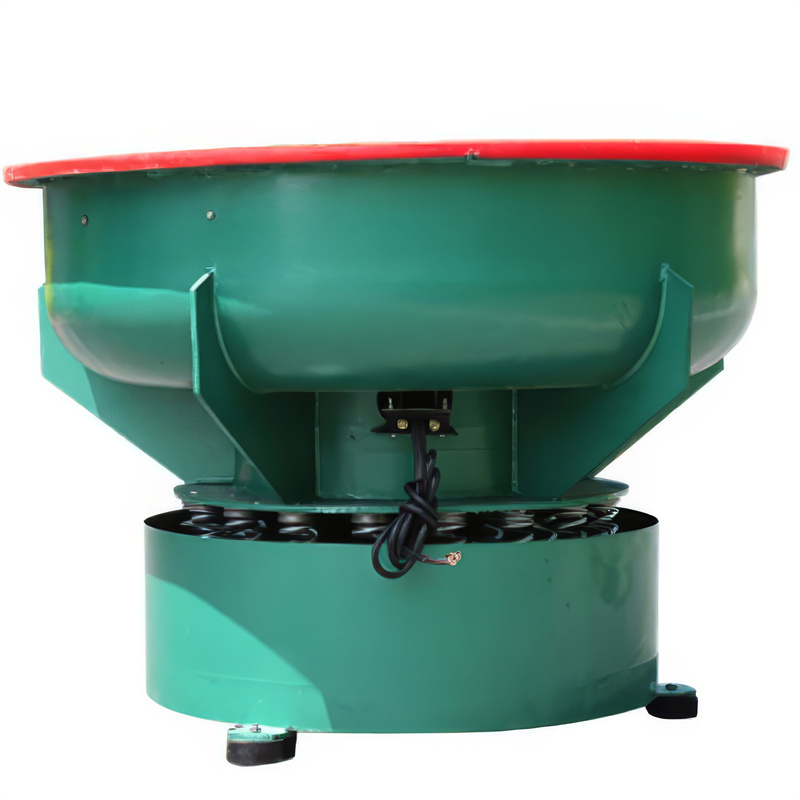
Transitioning from manual deburring or legacy tumbling processes to automated surface finishing is a critical capital expenditure decision. Traditional manual methods often struggle to keep pace today. Production bottlenecks usually stem from inefficient human labor. For production managers and engineers, a vibratory finishing machine represents a vital shift toward repeatable quality. However, navigating the promises of efficiency requires looking past surface-level marketing claims. Modern manufacturers need verifiable results. You must understand how this equipment affects daily throughput. You also need to evaluate compliance readiness thoroughly. This guide breaks down the verifiable operational and financial advantages of automated vibratory finishing. We establish a clear framework here. It will help you evaluate if this technology aligns effectively against your specific production metrics. We will explore process versatility, cycle efficiency, and proper architecture selection.
Key Takeaways
Scrap Reduction & Consistency: Vibratory finishing minimizes part-on-part impingement, delivering uniform Ra (Roughness Average) values essential for compliance-heavy industries.
Labor Reallocation: Replaces inconsistent, high-cost manual deburring with a scalable, predictable batch process.
Process Versatility: Adaptable for cleaning, descaling, radiusing, and polishing across diverse materials by modifying media and compound formulations.
Evaluation Mandate: Successful implementation requires empirical sample processing to determine exact cycle times, media-to-part ratios, and wastewater management needs.
The Business Case: Solving Production Bottlenecks
Manual finishing hides significant operational costs. Hand deburring relies entirely on operator skill. This reliance creates major inconsistencies across production batches. High labor rates drain profit margins quickly. Ergonomic risks present another severe financial threat. Operators often develop repetitive strain injuries. These injuries lead to costly workers' compensation claims. Human fatigue inevitably causes uneven edge radiusing. Scrap rates increase when parts fail inspection.
Legacy barrel tumbling attempts to solve these issues. However, tumbling falls short for modern manufacturing. Barrel tumblers rotate, causing parts to crash down upon each other. This aggressive cascading action frequently damages delicate components. It bends fragile edges. Furthermore, tumbling media cannot effectively reach internal channels. It relies solely on gravity. High-tolerance aerospace or medical parts cannot survive this rough treatment. A vibratory finishing machine solves these legacy limitations entirely.
To justify new equipment, you must define clear success criteria. Integration success requires specific measurable outcomes. A successful implementation strategy focuses on three primary goals:
Specific Cycle Time Reduction: Achieving faster batch turnovers compared to manual processing sequences.
Strict Compliance Achievement: Meeting rigorous medical or aerospace surface standards consistently.
Lowering Per-Part Processing Cost: Reducing the variable labor expense tied to each manufactured component.
Core Operational Benefits of Vibratory Finishing
Precision and Part Integrity
The fundamental advantage lies in process physics. Motor weights generate a fluid, three-dimensional corkscrew action. The mass of media and parts moves continuously. They travel around the chamber while simultaneously rolling inward. This motion prevents parts from violently striking one another. The media gently scrubs the part surfaces. It acts like thousands of tiny files working simultaneously. You can finish fragile or complex geometries safely. The process removes burrs without altering critical dimensional tolerances. Machined threads remain perfectly intact.
Scalability and Cycle Efficiency
Batch processing transforms production throughput. A single vibratory finishing machine handles hundreds of parts simultaneously. This method operates continuously. It easily digests high manufacturing volumes. We see a massive impact on overall throughput. Manufacturers move away from sequential manual labor. Operators no longer process one part at a time. Parallel machine processing takes over. Machine operators simply load batches and walk away. They can perform other high-value tasks during the cycle. Cycle efficiency skyrockets as a result.
Surface Consistency and Compliance Readiness
Human error disappears from the deburring equation. Machines do not get tired. They execute the exact same mechanical action every single time. This uniformity creates highly predictable surface finishes. Repeatable Ra (Roughness Average) values become standard practice. Stringent industry standards demand this consistency. ISO certifications require documented, repeatable processes. AS9100 aerospace standards tolerate zero deviations. Automated vibratory finishing guarantees compliance readiness. It secures your position as a reliable supplier.
Choosing the Right Vibratory Finishing Machine Architecture
Vibratory Bowl Finishers
Bowl finishers represent the industry standard for general manufacturing. They feature a circular processing chamber. A center column houses the drive motor. This architecture is best suited for round or cubic parts. Bowl machines easily integrate into continuous manufacturing lines. The primary decision driver is the built-in separation deck. An internal flap engages at the cycle end. It guides parts and media over a sizing screen. The media falls through. The parts exit the machine automatically. This internal separation drastically reduces material handling time. However, bowls have spatial constraints. They struggle to process exceptionally long or oversized components. Long shafts may jam inside the curved channel.
Vibratory Tub (Trough) Finishers
Tub finishers utilize a rectangular processing chamber. A motor mounts beneath or alongside the heavy-duty trough. These machines are best for long, bulky, or heavy parts. Aerospace spars fit perfectly. Automotive camshafts and large engine blocks process easily. The primary decision driver here is part isolation. You can compartmentalize the tub using physical dividers. These dividers prevent heavy parts from colliding during operation. Tub finishers protect high-value components effectively. The main constraint involves unloading. Tubs typically lack internal separation screens. You usually require manual unloading. Alternatively, you must invest in external separation conveyors.
Below is a quick comparison chart detailing these two common architectures:
Feature Category
Vibratory Bowl Finisher
Vibratory Tub Finisher
Ideal Part Geometry
Small to medium; round, flat, or cubic.
Large, exceptionally long, or extremely heavy.
Separation Mechanism
Built-in internal screen deck (automated).
External vibrating screens or manual removal.
Production Flow
Supports continuous feed or batch processing.
Primarily restricted to dedicated batch processing.
Part Impingement Risk
Low to moderate (managed by correct media ratio).
Very low (when utilizing compartmental dividers).
Evaluation Dimensions: Measuring ROI and Fit
Purchasing capital equipment involves assessing precise technical variables. You must carefully evaluate several dimensions. Proper planning ensures the machine integrates smoothly. It also guarantees long-term operational success.
Media-to-Part Ratios
Production volume dictates your necessary machine size. You cannot simply fill the chamber entirely with parts. You must maintain an optimal media-to-part ratio. The industry standard ratio is usually 3:1 or 4:1 by volume. This means you need three parts of abrasive media for every one part of workload. This ratio provides effective cutting action. More importantly, it offers crucial part protection. The media suspends the workpieces. It creates a physical barrier between metal parts. If you overload the machine, parts will collide. Edge damage will occur rapidly. Calculate your hourly part volume first. Then size the machine to accommodate the required media volume.
Automation Integration
Standalone machines work well for small shops. High-volume facilities require full automation integration. You must assess compatibility against your existing workflows. How will parts enter the machine? Automated hopper loaders eliminate manual lifting. They drop specific batch weights precisely. How will parts exit? You might need conveyor belts to transport finished components. Wet parts rust quickly. You often need to integrate inline drying systems. Heated maize dryers or forced-air ovens are common add-ons. Seamless integration maximizes your equipment utilization rate.
Wastewater & Effluent Management
Wet processing generates industrial effluent. Liquid compounds mix with water. They flush away metal fines and degraded media dust. This mixture creates a steady stream of wastewater. You cannot ignore environmental and regulatory requirements. Managing compound runoff is legally mandatory. You cannot dump untreated sludge directly down municipal drains. Local laws strictly regulate heavy metals and suspended solids. You must evaluate wastewater treatment options. Centrifuges spin out heavy solid particles. Flocculant systems clump contaminants together for easy filtering. Proper effluent management prevents massive regulatory fines.
Implementation Realities and Adoption Risks
The "Magic Bullet" Fallacy
Many facilities fall victim to the magic bullet fallacy. They believe buying the machine instantly solves all finishing problems. This is simply untrue. The machine itself is only half the solution. You must dial in the specific process recipe. You need the exact media shape and abrasiveness. You must optimize the water flow rate. You also need the correct liquid compound formulation. Finding this perfect combination requires methodical testing. Minor recipe changes drastically alter surface outcomes. You must commit time to initial process development.
Acoustic and Vibration Management
Industrial realities demand attention to working environments. These machines generate significant noise. The motor creates heavy vibrations. Ceramic media constantly scraping against metal creates high decibel levels. Noise often exceeds 85 decibels. Prolonged exposure harms operator hearing. You must address acoustic and vibration management early. Consider purchasing acoustic sound covers. Many manufacturers offer noise-reducing lids. Alternatively, construct isolated installation zones. Place the machine in a dedicated, soundproofed room. Anchor the machine securely to a thick concrete floor.
Maintenance Requirements
Industrial processing involves severe wear and tear. Abrasive media wears down parts continuously. The processing chamber relies on a thick polyurethane lining. This lining protects the steel tub from abrasion. It is a consumable wear part. High usage eventually degrades the polyurethane. Drive motors endure constant eccentric stress. They require heavy-duty bearings. Emphasize the need for scheduled preventative maintenance. Inspect linings weekly. Grease bearings according to manufacturer schedules. Catching a small lining tear prevents catastrophic metal-on-metal damage. Proactive care avoids unplanned downtime.
The Shortlisting Next Step
Do not buy equipment blindly from a catalog. Urge your procurement team to require a sample processing test. Reputable OEMs gladly process your actual parts before purchase. They will run trial batches. They document the media used and the cycle time required. This empirical testing validates finish quality instantly. It proves the machine works for your specific geometry. It eliminates purchasing risks completely. Never accept theoretical estimates over physical proof.
Conclusion
Investing in a vibratory finishing machine fundamentally modernizes your manufacturing floor. It transforms surface treatment from an unpredictable manual variable into a tightly controlled operation. You gain scalable consistency, reduced labor reliance, and superior quality control.
When selecting your next finishing solution, prioritize transparency and ongoing partnership. We strongly advise decision-makers to select equipment vendors who offer clear process testing. Comprehensive post-sale support matters far more than simple raw price comparisons. A cheaper machine costs more if it cannot achieve your required Ra values.
Here are your immediate next steps:
Conduct an internal audit of your current manual deburring cycle times and scrap rates.
Identify your most difficult, labor-intensive parts.
Submit these specific sample parts to vendors for proof-of-concept testing.
Review the empirical test reports to confirm cycle efficiency and final surface quality.
FAQ
Q: How does vibratory finishing compare to centrifugal disc finishing in terms of cycle time?
A: Centrifugal disc machines are significantly faster. They utilize high G-forces to accelerate processing. However, they are often more expensive to purchase and maintain. Centrifugal action is highly aggressive. It can easily damage fragile or thin-walled components. Vibratory finishing remains highly versatile. It is much more cost-effective for general batch processing. It gently handles delicate parts while still delivering excellent cycle efficiency.
Q: Can a vibratory finishing machine process internal channels and blind holes?
A: Yes, it can process internal geometries effectively. The key lies in proper media selection. You must choose a media size small enough to flow completely through the hole. If media is improperly sized, it will lodge inside blind holes. You must also utilize flow-through liquid compounds. The continuous fluid action flushes out debris and prevents internal packing.
Q: What is the expected lifespan of the polyurethane lining in a vibratory bowl?
A: A high-quality polyurethane lining typically lasts between 3 and 10 years. Lifespan depends heavily on daily usage hours. It also depends on the aggressiveness of your media. Processing heavy steel parts reduces longevity. Running dry without proper compound lubrication accelerates wear rapidly. Treat the lining as a replaceable wear part. Conduct weekly visual inspections to catch minor wear early.
Q: Do I need a dedicated wastewater treatment system for vibratory finishing?
A: Yes, you typically need some form of treatment. The process generates industrial effluent. This wastewater contains suspended abrasive solids, metal fines, and trace oils. Municipalities strictly forbid discharging heavy metals directly into public drains. You must comply with local environmental regulations. Simple centrifuge systems or chemical flocculant setups effectively separate the solid waste from the water before safe discharge.