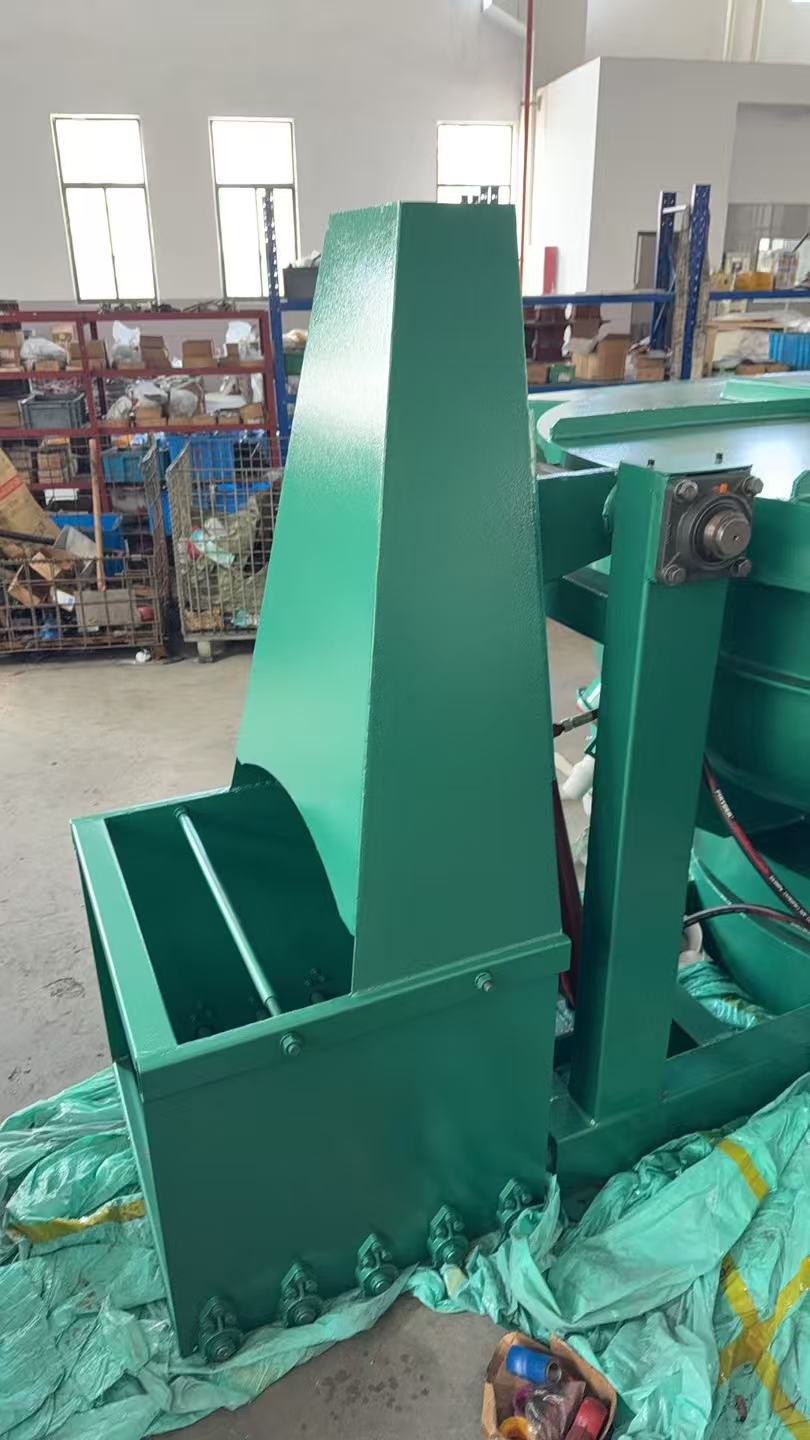
Industrial manufacturing often suffers from a terminology gap. Many plant managers use terms interchangeably when they seek reliable surface processing. They ask for a vibratory system when they actually need a broader category of equipment. The term mass finishing serves as the overarching family of batch-processing technologies. Vibratory finishing represents just one highly popular sub-type within this family. Manufacturers scaling up from manual deburring face a distinct challenge. They need predictable, repeatable surface finishing to keep up production demands. Choosing the wrong equipment creates severe bottlenecks. It can also damage delicate components. This article provides a definitive comparison of standard vibratory systems against other common finishing machines. We will explore rotary barrels and centrifugal discs. You will learn how to evaluate the right equipment for your specific part geometries, volumes, and budgets. This knowledge ensures your line runs at peak efficiency.
Key Takeaways
Category vs. Sub-type: A mass finishing machine is any equipment that processes multiple parts simultaneously; a vibratory machine uses motor-driven eccentric weights to create a scrubbing action.
Vibratory Strengths: Vibratory systems excel at maintaining part integrity, reaching internal cavities, and allowing in-process inspection.
Alternative Technologies: When vibratory finishing is too slow or too gentle, other mass finishing methods (like centrifugal barrel or high-energy disc) are evaluated for higher G-force efficiency.
Decision Criteria: The final equipment choice must be dictated by part fragility, cycle time constraints, and media separation capabilities.
The Taxonomy of Mass Finishing: Where Vibratory Fits
Mass finishing operates as a comprehensive batch process. It combines manufactured parts, abrasive media, water, and specialized chemical compounds. Operators deploy it to achieve deburring, radiusing, degreasing, or polishing. A standard mass finishing machine automates these surface improvements across multiple parts simultaneously. It successfully replaces inconsistent manual labor.
The vibratory finishing machine dominates modern automated setups. It utilizes motor-driven eccentric weights to generate high-frequency vibrations. This mechanical action creates a distinct toroidal, or corkscrew, motion inside the processing chamber. The media and parts roll together in a continuous spiral. This movement provides a highly consistent scrubbing action. It remains the industry standard for excellent reasons. The gentle but effective abrasion suits most general manufacturing needs.
However, the real comparison arises during the equipment procurement phase. Buyers searching for the difference are usually evaluating specific machine configurations. They are weighing standard vibratory tubs and bowls against alternative technologies. They often compare standard vibration against traditional tumble barrels or high-energy centrifugal systems. You must understand how these mechanisms fundamentally differ to make an informed choice.
Evaluating Vibratory Systems Against Alternative Mass Finishing Machines
Comparing equipment types requires examining the underlying mechanical action. Each machine interacts differently with parts and media. We categorize the main options below.
Vibratory Bowls and Tubs (The Baseline)
Vibratory equipment represents the most common processing solution worldwide. It offers an excellent balance of safety and effectiveness.
Mechanism: These machines rely on high-frequency, low-amplitude scrubbing. Eccentric weights shake the chamber, moving the media in a tight spiral path.
Best For: They are ideal for delicate parts and complex geometries. They handle internal channels beautifully. Rectangular tubs easily accommodate heavy or uniquely large parts.
Limitation: They require longer cycle times compared to high-energy systems. Processing can take hours rather than minutes.
Rotary Barrel / Tumbling Machines
Rotary barrels represent one of the oldest forms of surface finishing. They use gravity to perform heavy mechanical work.
Mechanism: They utilize a slower rotational sliding action. As the barrel turns, parts and media climb the wall and cascade down. We call this the landslide effect.
Best For: They deliver aggressive edge radiusing. They excel at heavy burr removal on highly durable parts. They also suit budget-conscious operations perfectly.
Limitation: You face a higher risk of part-on-part impingement. You also find it impossible to inspect parts mid-cycle because closed barrels must remain sealed.
Centrifugal Barrel and Disc Machines
Centrifugal systems answer the demand for extreme speed. They leverage powerful physics to accelerate the finishing process dramatically.
Mechanism: They rely on high-speed rotation generating high G-forces. The turrets spin in one direction while the individual barrels spin in the opposite direction.
Best For: They deliver rapid processing. Cycle times are up to 10x faster than vibratory machines. They perfectly handle medical implants, aerospace components, and ultra-high polish requirements.
Limitation: They require high initial capital expenditure. They generally offer smaller batch capacities and suffer from higher mechanical wear.
To summarize the fundamental differences, review the technical comparison chart below:
Choosing the right technology requires careful evaluation of your production constraints. You must look beyond simple machine pricing. Consider how part geometry and processing speeds impact your daily operations.
Part Geometry and Fragility
Surface-to-surface contact differs significantly across machine types. Vibratory equipment suspends parts entirely within the media mass. The media acts as a protective cushion. This makes vibratory action much safer for fragile or easily dented items. Conversely, rotary barrels lift and drop the entire mass. They risk dropping heavy parts directly onto one another. This impingement can ruin delicate threading or thin walls. You must match the machine kinematics to part robustness.
Cycle Time vs. Throughput
Plant managers must constantly analyze the tradeoff between processing speed and continuous throughput. Centrifugal systems process small batches incredibly fast. They drastically reduce cycle time for individual lots. However, vibratory bowls often feature integrated separation decks. They easily facilitate continuous, automated inline throughput. You can feed parts in continuously and extract finished parts seamlessly. High-energy centrifugal machines usually operate purely as distinct batch systems. This requires more manual loading and unloading intervention.
Surface Finish Uniformity
Isotropic finish quality dictates the final appearance of your components. You must compare how each machine approaches surface uniformity. Vibratory action reaches deeply into recessed areas. The vibrating media actively scrubs tight corners and internal channels. Tumbling media inside a rotary barrel often bridges over these small recesses. The cascading action misses deep cavities entirely. Centrifugal systems provide excellent uniformity but generate massive pressure. This pressure sometimes rounds edges more aggressively than desired. Vibratory processing generally ensures the most uniform, predictable isotropic finish.
Implementation Realities and Hidden Risks
Practical deployment uncovers several challenges. You must address these hidden risks early in the facility planning stages. Poor planning leads to production downtime and ruined batches.
Media Lodging: Abrasive media often gets stuck in blind holes or tight slots. This represents a highly common risk in vibratory processing. If media sizing isn't rigorously tested beforehand, you will spend hours manually picking stones out of parts. Always test multiple media shapes and sizes during sample processing to ensure clean separation.
Wastewater and Environmental Compliance: You must address the operational reality of handling the effluent. Finishing generates sludge, metal fines, and spent chemical compounds. Both vibratory and centrifugal systems require proper wastewater filtration. Many modern plants deploy closed-loop recycling systems. These systems capture the effluent, filter the solids, and reuse the water. You cannot simply dump untreated processing fluids down a municipal drain.
Acoustic Management: Industrial finishing generates significant decibel levels. Vibratory bowls and high-speed centrifugal machines emit continuous, loud noise. You must factor in the cost of sound enclosures or acoustic covers. Many original equipment manufacturers offer custom sound cabins. These cabins bring the operating noise down to safe, compliant factory levels.
Automation Readiness: Modern facilities require seamless integration. Evaluate how easily the machine accepts robotic loading and automated conveyor belts. Vibratory bowls easily integrate automatic media-part separation screens. Centrifugal systems require more complex robotics to empty the heavy processing barrels. Consider your future automation goals before committing to a specific machine architecture.
Shortlisting Logic: Which System Fits Your Production Line?
Navigating the equipment market requires clear decision rules. Follow this shortlisting logic to match the machine to your exact production demands.
Opt for a Vibratory Finishing Machine if:
You require continuous, inline processing with built-in media separation decks.
Your components are easily damaged by impact and require gentle cushioning.
You need to process a highly varied mix of part sizes in the same shift.
Opt for a Centrifugal/High-Energy Mass Finishing Machine if:
Cycle time reduction serves as your primary return on investment driver.
You process very hard metals like titanium or Inconel. These metals resist standard vibratory abrasion.
You manufacture high-value medical implants or aerospace components demanding an ultra-fine polish.
Opt for a Traditional Rotary Barrel if:
Your capital equipment budget remains strictly limited.
Your parts are heavy, durable, and highly resistant to impact damage.
You require aggressive heavy-burr removal without strictly maintaining precision dimensional tolerances.
The Non-Negotiable Next Step: You must mandate sample processing. Never purchase finishing equipment blindly. Always send sample parts directly to the manufacturer. They will validate the precise media recipes. They will confirm the optimal cycle times. They will guarantee the final finish specifications before you sign a purchase order.
Conclusion
The term mass finishing describes a critical problem-solving category in modern manufacturing. Within this broad family, the vibratory finishing machine usually stands as the safest, most scalable baseline solution. It handles diverse geometries gently while offering easy automation.
Remember that successful deployment relies on a complex recipe. It depends less on the machine's specific label and more on the precise combination of machine kinematics, media type, and chemical compounds. Your exact component design dictates the correct processing formula.
Evaluate your part fragility and cycle time limits before reviewing equipment brochures.
Define your automation requirements, especially regarding media separation and wastewater management.
Request a free sample processing test from trusted manufacturers to build a data-backed business case.
FAQ
Q: Can a vibratory finishing machine polish parts to a mirror finish?
A: Yes, it certainly can. Operators achieve a mirror finish using specific high-density burnishing media and specialized liquid compounds. However, the vibratory process takes several hours to achieve this state. High-energy centrifugal systems accomplish mirror finishes much faster.
Q: Is tumbling the same as mass finishing?
A: Tumbling is an older, specific subset of the broader finishing category. Many people use the term colloquially to describe all batch processing. However, traditional tumbling relies on a sliding, gravity-driven landslide effect. It differs mechanically from the modern spiral scrubbing action of vibratory equipment.
Q: How do I choose the right media for my mass finishing machine?
A: Media selection depends entirely on part material, geometry, and your final goal. Use ceramic media for heavy cutting and burr removal. Choose plastic media for processing soft metals like aluminum. Select organic media like walnut shells for dry polishing. Always emphasize physical testing to prevent media from lodging in part crevices.