Introduction
Ever wondered how a polishing machine works? Many surfaces look dull or scratched. A polishing machine can restore smoothness. But using it correctly matters. In this article, you will learn how to use a polishing machine safely and achieve better surface finishing results.
What a Polishing Machine Actually Does in Surface Finishing
The Basic Working Principle of a Polishing Machine
A polishing machine improves the smoothness and appearance of material surfaces by applying controlled friction through rotating polishing wheels, pads, or abrasive compounds. In industrial surface finishing, the purpose is not only to create a shiny surface but also to remove small imperfections such as oxidation layers, machining marks, or fine scratches. By gradually refining these irregularities, the machine produces a smoother and more uniform surface that is ready for further treatments like coating, plating, or assembly.
The polishing process mainly relies on three factors: motion, pressure, and abrasive interaction. During operation, the polishing tool rotates or oscillates at a controlled speed while maintaining consistent pressure against the workpiece. This mechanical action removes microscopic material layers and improves both surface texture and visual quality. Because the motion and pressure remain stable, polishing machines are able to deliver more consistent finishing results than manual polishing.

How Machine Polishing Differs from Traditional Manual Polishing
Manual polishing has traditionally been used in workshops and craftsmanship because it allows detailed control over small areas. However, it depends heavily on operator skill and physical effort, which can lead to inconsistent results when processing larger surfaces or multiple components.
Machine polishing introduces mechanical precision and repeatability. The machine maintains stable speed and pressure during the polishing process, ensuring that each workpiece receives uniform treatment. This controlled operation reduces surface variation and significantly increases production efficiency.
Even so, manual polishing is still useful for certain tasks, particularly when dealing with intricate shapes or delicate areas that machines cannot easily reach. In many industrial workflows, machine polishing is used for bulk processing, while manual polishing is reserved for final touch-ups.
Why Polishing Machines Became Essential in Modern Surface Finishing
As manufacturing industries have advanced, the demand for high precision, faster production cycles, and consistent product quality has increased. Surface finishing directly influences a component’s appearance, durability, and coating performance, making reliable polishing processes essential.
Polishing machines address these requirements by enabling manufacturers to process large batches of components with consistent surface quality. They also integrate easily with other finishing processes such as grinding, deburring, and cleaning, creating more efficient production workflows.
For these reasons, polishing machines have become a core part of modern surface finishing systems, supporting the broader shift toward automation, precision manufacturing, and scalable production.
Industrial Polishing Machine Applications
Metal Surface Finishing in Manufacturing and Fabrication
In metalworking industries, polishing machines are widely used to refine the surface quality of components produced through machining, casting, or forming processes. After manufacturing, many metal parts contain small imperfections such as burrs, tool marks, oxidation layers, or uneven textures that must be removed before the product can meet quality standards.
A polishing machine helps eliminate these irregularities by gradually smoothing the surface with controlled abrasion. This not only improves the visual appearance of the metal but also enhances its functional performance, especially in applications where friction, corrosion resistance, or coating adhesion are critical.
Typical metal fabrication polishing tasks include:
● Removing machining marks from steel or aluminum components
● Preparing surfaces for electroplating or anodizing
● Improving reflectivity and surface brightness
● Smoothing weld seams and joints
These processes are common in sectors such as hardware manufacturing, pipe production, construction materials, and industrial equipment manufacturing. By ensuring consistent finishing quality, polishing machines help manufacturers maintain uniform product standards across large production volumes.
Polishing Processes Used in Automotive and Mechanical Components
The automotive and mechanical engineering industries rely heavily on polishing machines because surface quality directly affects performance, durability, and reliability. Components such as shafts, cylinders, valves, and decorative parts must often undergo polishing to remove micro-defects that could compromise mechanical efficiency.
For example, a polished surface reduces friction between moving components, which can improve operational efficiency and extend service life. In addition, visible automotive parts require polishing to achieve the clean and reflective appearance expected by consumers.
Common automotive polishing applications include:
● Polishing stainless steel exhaust components
● Refining chrome-plated or decorative metal parts
● Smoothing engine components to reduce friction
● Preparing parts for protective coatings or paint
The table below outlines how polishing contributes to the performance of automotive components:
Component Type | Purpose of Polishing | Resulting Benefit |
Engine Shafts | Reduce surface roughness | Improved mechanical efficiency |
Exhaust Pipes | Remove oxidation and scratches | Enhanced durability and appearance |
Decorative Trim | Achieve high-gloss finish | Better aesthetic quality |
Hydraulic Components | Smooth sealing surfaces | Reduced leakage and improved sealing |
Because of these functional requirements, polishing machines are often integrated into automated manufacturing lines within automotive production facilities.
Precision Finishing for Hardware, Electronics, and Engineered Parts
Beyond heavy industrial manufacturing, polishing machines also play a crucial role in industries that require highly precise and controlled surface finishing. Hardware products, electronic components, and engineered parts often contain small features or tight tolerances that demand careful finishing to ensure proper performance.
In electronics manufacturing, for instance, polished metal connectors must maintain smooth surfaces to ensure reliable electrical contact. Similarly, precision hardware products such as tools, fasteners, and mechanical components require polishing to improve durability and resistance to wear.
Typical precision polishing applications include:
● Finishing metal connectors and electronic terminals
● Polishing precision instrument parts
● Refining small mechanical components for improved fit and movement
These applications highlight how polishing machines support both aesthetic and functional requirements across a wide range of modern manufacturing sectors. By delivering controlled and repeatable finishing quality, they help ensure that even small components meet strict performance and reliability standards.
How a Polishing Machine Improves Surface Quality
Removing Scratches, Oxidation, and Surface Irregularities
During machining, casting, or material handling, metal surfaces often develop small defects such as machining marks, oxidation layers, or minor scratches. These imperfections not only affect the visual appearance of a component but can also influence its mechanical performance and coating adhesion. A polishing machine helps eliminate these defects by applying controlled abrasive contact through rotating polishing wheels or pads.
As the polishing media moves across the material surface, abrasive particles gradually remove microscopic high points and uneven textures. This process reduces surface roughness and restores a smoother and more refined surface profile. In industrial applications, polishing is often used after machining or grinding to prepare the material for further finishing processes such as electroplating, painting, or protective coating.
Common surface defects that can be corrected through machine polishing include machining marks left by cutting tools, oxidation layers formed during storage or heat exposure, and small scratches introduced during transportation or assembly. By removing these irregularities, the polishing process improves both the appearance and functional reliability of the finished component.

Achieving Uniform Surface Polishing Across Larger Workpieces
One of the key advantages of using a polishing machine is its ability to produce consistent surface finishes across large or elongated workpieces. When polishing is performed manually, variations in pressure and movement often result in uneven surfaces. Machines eliminate this issue by maintaining stable rotation speed and controlled polishing pressure throughout the process.
This uniformity is particularly important for components such as metal pipes, shafts, or structural parts that require consistent finishing along their entire length. Through controlled feed mechanisms and adjustable polishing parameters, the machine ensures that every section of the workpiece receives the same level of surface treatment.
Surface Improvement | How the Polishing Machine Achieves It | Industrial Benefit |
Reduced surface roughness | Abrasive polishing smooths micro-irregularities | Improved mechanical performance |
Removal of oxidation layers | Controlled abrasion removes oxide films | Better coating adhesion |
Uniform surface finish | Stable speed and pressure during polishing | Consistent product quality |
Enhanced appearance | Fine polishing stages create reflective surfaces | Improved product aesthetics |
Polishing Machine Benefits
Advantages of Using a Polishing Machine in Production
In modern manufacturing environments, a polishing machine plays a critical role in improving both production efficiency and product quality. Compared with traditional manual polishing methods, machine polishing relies on controlled mechanical motion, consistent rotational speed, and stable polishing pressure, enabling manufacturers to achieve repeatable and uniform surface finishing results. This is especially important in industries where large numbers of identical components must meet strict surface quality standards.
One of the most significant advantages of machine polishing is processing efficiency. Rotating polishing wheels combined with automated or semi-automated feeding systems allow workpieces to be polished continuously. Instead of relying on labor-intensive hand polishing, operators can supervise multiple parts being processed simultaneously. As a result, manufacturers can significantly shorten finishing cycles while maintaining stable polishing quality.
In addition to speed, polishing machines also improve surface consistency and process stability. Because the machine maintains constant polishing parameters—such as speed, pressure, and polishing angle—each workpiece receives the same treatment. This level of consistency is particularly valuable for parts that require smooth surfaces for coating adhesion, corrosion resistance, or aesthetic appearance.
Several practical advantages explain why polishing machines are widely adopted in industrial finishing processes:
Production Factor | Manual Polishing | Machine Polishing |
Processing Speed | Slow and labor-intensive | Fast, continuous operation |
Surface Consistency | Depends on operator skill | Highly repeatable finishing results |
Production Capacity | Limited batch processing | Suitable for large production volumes |
Labor Requirement | High physical effort | Lower labor intensity |
Process Stability | Difficult to standardize | Adjustable and controlled parameters |
By combining speed, consistency, and precise process control, polishing machines enable manufacturers to maintain high-quality finishing standards while improving overall production efficiency. These advantages explain why polishing equipment has become an essential component in many modern metalworking and manufacturing operations.
Situations Where Manual Polishing May Still Be Preferable
Although polishing machines offer significant productivity advantages, manual polishing still remains useful in certain manufacturing scenarios. Machine polishing systems are optimized for speed and consistency, but some situations require the flexibility and detailed control that manual techniques provide.
Manual polishing is often preferred when dealing with complex geometries or delicate surfaces. Components with tight corners, intricate curves, or internal features may be difficult for machine polishing heads to reach effectively. In these cases, technicians can use handheld tools and polishing compounds to carefully refine specific areas that require extra attention.
Another situation where manual polishing can be practical is low-volume production or prototype work. When only a few parts require finishing, the time required to set up and adjust machine parameters may outweigh the benefits of automated processing. Skilled operators can polish individual components quickly without preparing specialized equipment.
Typical situations where manual polishing remains valuable include:
● Complex shapes and narrow areas Parts containing internal cavities, sharp edges, or curved surfaces may require manual finishing to achieve a uniform polish in areas that machines cannot easily access.
● Small-batch production or prototype manufacturing In early-stage development or custom fabrication projects, manual polishing can be more flexible than configuring automated equipment.
● Final touch-up polishing After machine polishing, technicians sometimes perform manual finishing to remove small marks or enhance surface appearance before inspection or packaging.
In many industrial environments, the most effective finishing strategy is a combination of machine polishing for efficiency and manual polishing for precision detailing. This approach allows manufacturers to maintain both productivity and high-quality surface finishing.
The Role of Operator Experience and Polishing Parameters
Even though polishing machines automate much of the mechanical work, operator expertise remains essential for achieving optimal finishing results. Surface polishing is a controlled process that depends on selecting appropriate machine settings, polishing materials, and processing time for each type of workpiece.
Different metals respond differently to polishing conditions. For example, softer materials such as aluminum may require lower polishing pressure and finer abrasives, while harder metals like stainless steel may need stronger polishing wheels during the initial stages of the finishing process.
Operators must carefully control several important parameters during the polishing process:
1. Rotational speed The speed of the polishing wheel determines how quickly the abrasive interacts with the surface. Higher speeds improve material removal efficiency but may generate excessive heat if not properly controlled.
2. Polishing pressure The force applied between the polishing wheel and the workpiece affects the rate of material removal. Proper pressure ensures effective polishing while preventing surface deformation or damage.
3. Selection of polishing media Different polishing wheels and abrasive compounds are designed for specific stages of finishing. Coarser media remove defects quickly, while finer media produce smooth and reflective surfaces.
4. Processing duration The amount of time a surface remains in contact with the polishing wheel affects the final finish quality. Excessive polishing can alter the dimensions of precision components, so operators must monitor processing time carefully.
When these parameters are properly balanced, polishing machines can produce smooth, uniform surfaces with minimal defects. Skilled operators play a crucial role in adjusting machine settings and selecting appropriate polishing tools, ensuring that finished components meet both functional and aesthetic requirements.
When a Polishing Machine Is Worth the Investment
Evaluating Surface Finishing Requirements and Production Scale
Investing in a polishing machine is often a strategic decision based on the specific finishing needs of a production environment. Companies that regularly produce metal components or require consistent surface treatment typically benefit the most from automated polishing systems.
One of the first factors to consider is the volume of parts requiring finishing. If a production line processes large quantities of components daily, manual polishing quickly becomes inefficient and costly. In such situations, polishing machines help maintain production speed while ensuring that each part meets the same finishing standards.
Another important factor is the required surface quality. Many industries—such as automotive, hardware manufacturing, and precision engineering—require polished surfaces for both functional and visual reasons. Smooth surfaces can improve corrosion resistance, enhance coating adhesion, and reduce friction in mechanical assemblies.
When evaluating whether a polishing machine is suitable for a manufacturing process, companies often analyze the following criteria:
● Production volume and throughput requirements High production output usually justifies the adoption of automated polishing systems.
● Surface finish standards Industries that demand precise finishing quality benefit from consistent machine polishing.
● Material type and component geometry Certain shapes, such as pipes or cylindrical components, are especially suitable for automated polishing equipment.
● Workflow integration Polishing machines can be integrated with other manufacturing processes such as grinding, deburring, or coating.
These considerations help manufacturers determine whether machine polishing will improve both productivity and finishing quality within their specific production environment.
Considering Equipment Cost, Training Needs, and Operational Setup
While polishing machines offer significant operational advantages, companies must also evaluate initial investment costs and operational requirements before implementing them. Industrial polishing equipment involves not only the purchase price but also installation, maintenance, and operator training.
The cost of a polishing system can vary depending on its size, automation level, and processing capacity. However, in many cases, the investment is offset by long-term savings in labor costs and improved production efficiency. Machines that operate continuously can complete tasks faster and with fewer quality variations, reducing the need for rework.
When assessing the feasibility of purchasing a polishing machine, manufacturers typically consider several practical factors:
● Equipment investment and expected return Companies analyze how quickly the machine will improve productivity and reduce operating costs.
● Operator training requirements Although polishing machines automate many tasks, operators must understand machine settings, polishing materials, and maintenance procedures.
● Workspace and installation conditions Industrial polishing machines require sufficient space, power supply, and dust-control systems to operate safely.
The following table outlines common cost-related considerations when evaluating polishing equipment:
Factor | Consideration | Potential Impact |
Initial Equipment Cost | Purchase price and installation | Short-term capital investment |
Labor Savings | Reduced manual polishing workload | Lower long-term labor expenses |
Maintenance Needs | Replacement of polishing wheels and routine servicing | Ongoing operational cost |
Productivity Gains | Faster processing and higher throughput | Increased manufacturing efficiency |
In many cases, businesses find that investing in a polishing machine becomes worthwhile when production demands increase and consistent surface finishing becomes essential. By carefully evaluating both operational needs and financial factors, manufacturers can determine whether automated polishing equipment aligns with their long-term production goals.
Conclusion
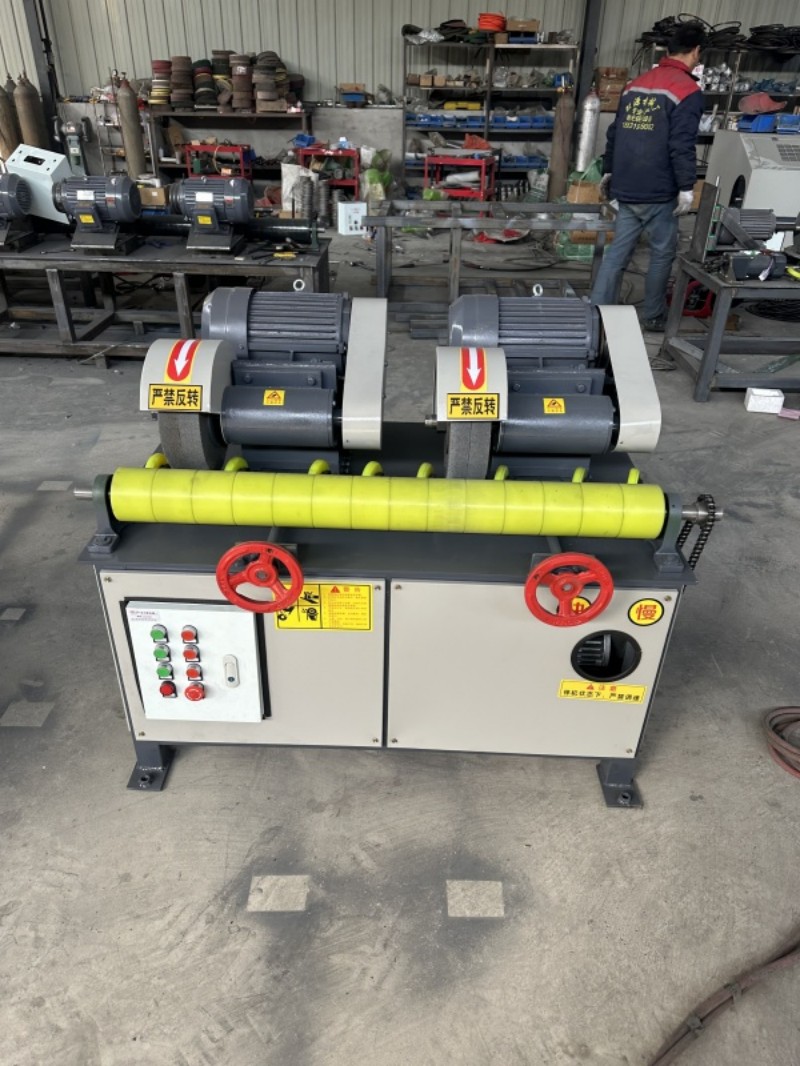
Using a polishing machine improves surface smoothness and finish quality.Proper speed, pressure, and tools help achieve stable polishing results.Huzhou Antron Machinery Co., Ltd. offers reliable polishing machines with efficient dual-station design.These machines support consistent finishing and help manufacturers improve productivity.
FAQ
Q: How do you operate a polishing machine safely?
A: Set correct speed and pressure, secure the workpiece, and move the polishing machine steadily across the surface.
Q: What materials can a polishing machine handle?
A: A polishing machine can process metals such as stainless steel, aluminum, copper, and iron depending on the abrasive and polishing wheel used.
Q: When should you use a polishing machine instead of manual polishing?
A: Use a polishing machine for consistent surface finishing on large batches or long workpieces where manual polishing is inefficient.
Q: What factors affect polishing results?
A: Key factors include abrasive type, rotation speed, contact pressure, and polishing time during the polishing machine process.